Calls for a governmental ‘X-odus’ grow as evidence of social harm mounts
With more politicians abandoning X, pressure is growing on the UK government to explore alternatives

Welcome back to The Eye—our weekly guide to the shifting relationship between Big Tech and the state.
This week: Politicians are turning their backs on X, but the government has yet to offer the public a clear alternative.
A recent resolution from Scottish National Party (SNP) members calling for a UK-wide ban on X has recently passed with an overwhelming majority at their party conference. The motion also calls for the Scottish government and Holyrood authorities to abandon the platform controlled by Elon Musk and remove themselves entirely from it.
This isn’t something that’s happened in isolation. Last week, the Scottish Greens also quit X (formerly Twitter), citing the spread of ‘misinformation and hate’, at the same time as Britain’s media regulator Ofcom said that concerns remain about X’s handling of illegal hate and terrorism related content, while the regulator continues its investigation of the platform for the proliferation of AI-generated sexualised images.
The moves come as political parties, individual parliamentarians, and government departments grapple with how best to approach successfully continuing to communicate with the public in an increasingly fractured online space, and amid a rise in hate speech and disinformation on some of the world’s most popular social platforms.
The amplification of hate
Criticisms of X are not unwarranted, nor is this the first time that politicians or government officials have felt compelled to abandon the platform and encourage others to do likewise, though meaningful action from the government has been slow at best.
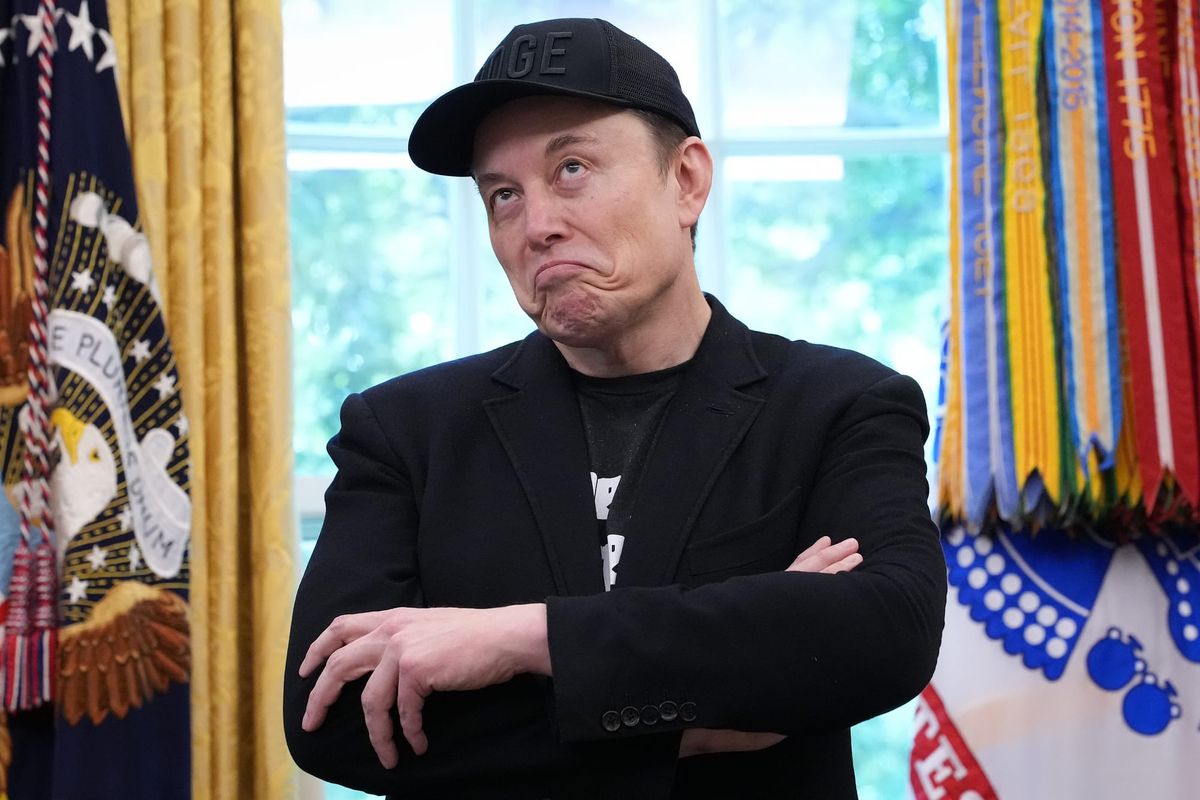
Patterns of disturbing activity on X, the platform once considered the world’s online ‘public square’, have shown to be persistent by multiple different bodies of research since Musk - who has since become the world’s first trillionaire - took over the platform in 2022.
According to one study published by a team of researchers from the University of California, hate speech on X was consistently 50% higher for at least eight months after Musk’s takeover. A data-led report by the AP in 2025 found that Musk had used the platform to elevate far-right figures in Europe, and a nine-month investigation by Sky News’ Data and Forensics team showed that X’s algorithm boosts far-right and extreme content, including posts by British far-right figures.
Researchers from tech nonprofit the Center for Countering Digital Hate recorded that during the anti-immigration riots in Belfast, Musk amplified calls for protest by far right agitator Stephen Yaxley-Lennon (AKA Tommy Robinson) and anti-immigration messaging from Restore Britain’s leader Rupert Lowe. Between the three, the posts were viewed more than 115 million times, with tweets from Musk reportedly accounting for 55% of the total.
An investigation by Amnesty International found that during the 2024 far-right riots in the wake of the tragic Southport murders, X created a ‘staggering amplification of hate’, with Musk himself tweeting at one point that “civil war is inevitable”, and again amplifying content from Yaxley-Lennon.
Musk has also tweeted at other points that Britain is a “tyrannical police state”, called Labour MP Jess Phillips a “rape genocide apologist” and called for her to be jailed, and accused the UK of going “full Stalin” during the 2024 farmers’ protests.
Little sign of government movement
Under former Prime Minister Keir Starmer’s government, X was first threatened with a UK-wide ban via Ofcom over its users’ widespread production of sexualised deepfake images of women and children being created through X’s AI tool, Grok. The investigation is still ongoing, and Ofcom plans to publish the results later in the year, but as of yet there has been no ban and nearly every governmental department still posts on X regularly as a primary means of communicating with the public.
Both the Starmer and Burnham administrations have taken few meaningful steps to reduce the government’s presence on X, or at least expand its presence on other social media platforms, which would give citizens greater choice.
In the week following the tragic death of Henry Nowak, when Musk tweeted or retweeted content about UK politics more than 110 times, Starmer hit out, accusing Musk of trying to ‘whip up division’, but there has ultimately been no meaningful follow-up, despite Liberal Democrat leader Ed Davey stating at the time that:
“Musk’s actions are a coordinated campaign of foreign interference in British democracy by a rogue American tech billionaire who seems hellbent on injecting poison directly into our domestic politics”.
Far from protecting the public from exposure to misinformation on X, an investigation by The Lead in April 2026 found that, even as the Labour government was warning of online harms, official websites funnelled tens of thousands of users directly to X to receive updates. Official gov.uk domains steered people to Musk’s platform to receive their news, generating at least 34,000 click-throughs to the platform between January 2025 and January 2026.
In this context, the motions by the Scottish Greens and SNP members are perhaps the clearest signal yet that remaining on a platform where harmful content is routinely amplified is becoming a decreasingly viable option to communicate government policy.
Expanding beyond X
The moves have also drawn a renewed focus to an Early Day Motion (EDM) tabled by Green MP Siân Berry in June, which calls on the government to ensure that:
‘All public sector social media content is published on open, decentralised and federated platforms, including those based on the ActivityPub and AT protocols [which underpin such social alternatives as Mastodon and BlueSky], as well as on the established United States platforms, so that citizens may follow official communications without being compelled to use services they find harmful’.
The EDM, which is supported by rights organisations such as Open Rights Group, states that: ‘no member of the public should be required to hold an account with a single commercial platform in order to receive public information’. It also notes that ‘government departments, public services and other parts of the public estate continue to rely heavily on X, Facebook, and similar platforms whose conduct and content moderation many users find toxic’.
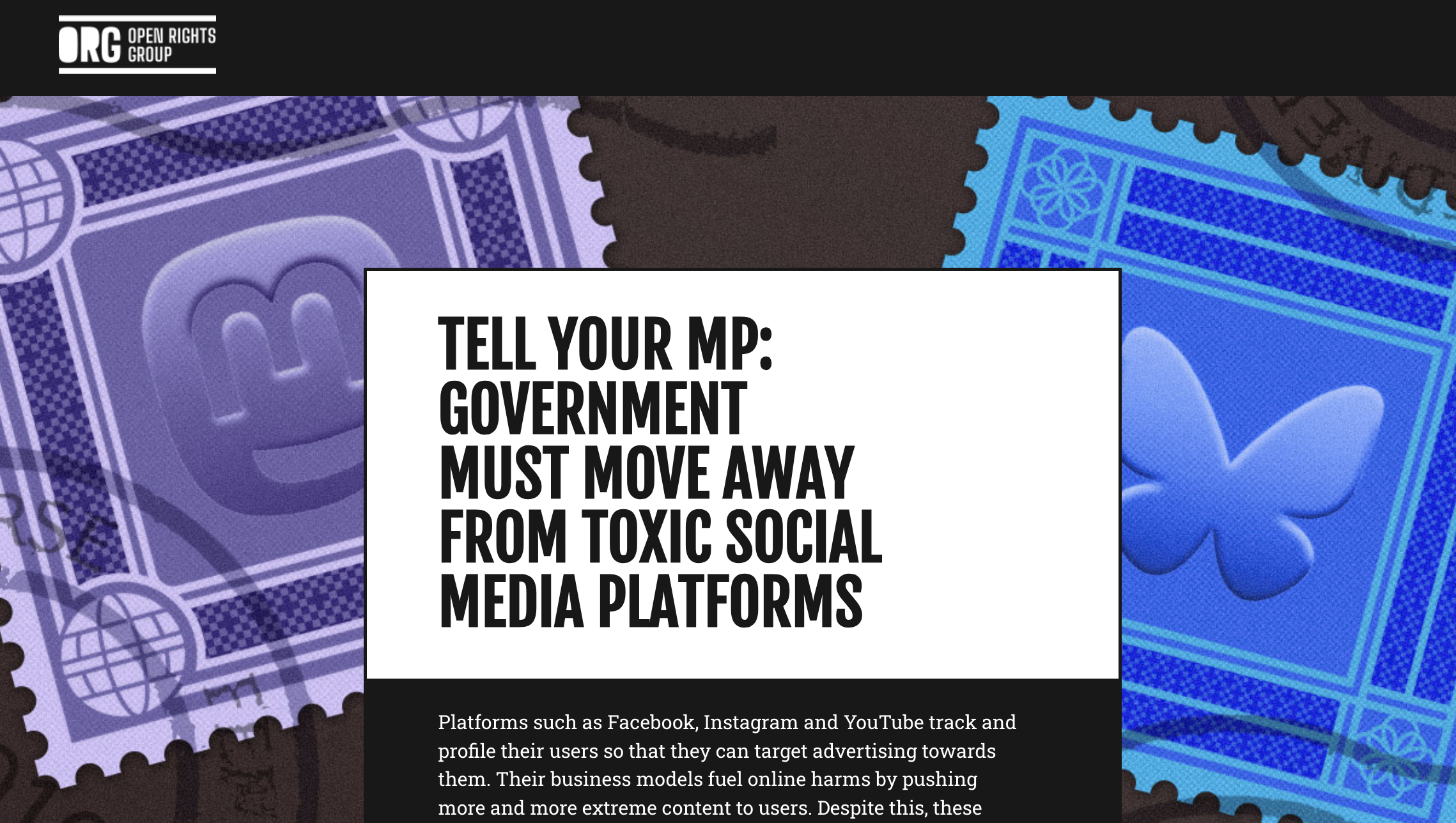
Speaking to the Citizens, Jim Killock, Executive Director at Open Rights Group, said that the EDM seeks to push the government to “offer alternatives to X, so that people can follow the government’s work on other platforms”.
He adds that: “At the moment the government is reinforcing national reliance on X, while also complaining about their decisions to promote extremist content, even to the point of Musk personally advertising race riots”.
“Many people want to interact with government content, but not on X, Facebook or YouTube. It is a simple step to provide alternatives, like Bluesky and Mastodon”.
Speaking to the idea of the government promoting decentralised alternatives, Killock told the Citizens that “Unlike centralised platforms, Bluesky and Mastodon accounts remain in the control of the government. It can choose how their material circulates”.
“Because they are decentralised, there is competition and choice over exactly how the services work. Content moderation rules are determined by users and providers, rather than a single global monopoly”.
“That model, of user empowerment and control over content, is how we can create social media diversity, rather than ceding control to technofeudal overlords whose agendas are deeply troubling, and often anti-democratic”.
Meanwhile, there remains a disconnect between the approaches taken by the government, and how individuals within and outside of it think this issue should ultimately be handled, whether it be banning platforms which proliferate or fail to control hate-speech entirely, regulating them into compliance, or continuing to perpetuate the status quo.
While investigations by the regulator Ofcom remain ongoing, MPs like Lisa Nandy, Secretary of State for Digital, Culture, Media and Sport (DCMS), and that department as a whole, have also recently left the platform, signalling that they have stopped using X over fears of the site pushing ‘abuse and misinformation’. The move itself is an odd one, given that DCMS itself bears responsibility for media regulation, seemingly leaving the burden of enforcement in this to Ofcom alone.
All the while, people wanting to access official information and updates, but unsure of where best to do so, are trapped in a limbo where there exist pockets of cross-party, individual, and departmental resistance to X (as well as to other platforms like Facebook), but no clear path forward. With evidence continuing to mount of growing social harms from content so far allowed to proliferate on X, the need for a coherent policy from central government is becoming increasingly apparent.
Thanks for reading! We are developing this as we go, and we want to build it with you. Tell us what’s working and what’s missing below.
About The Eye: In an era where Silicon Valley is rewriting the rules of governance and unaccountable tech companies are capturing our public services from the inside out, The Eye exists to follow the power, connect the dots and reveal how technology is reshaping our state.