“Far too slow, far too timid”: Is Ofcom out of its depth?
With trust in Ofcom eroding, we asked leading campaigners whether the watchdog can be saved or if it’s time to build something new

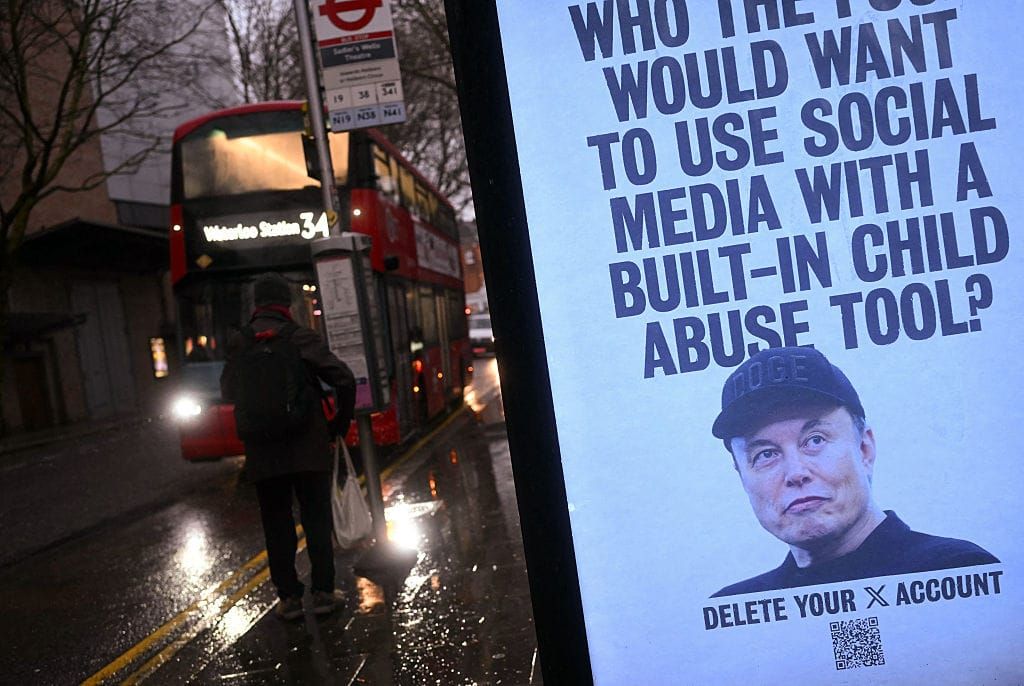
Whether it’s hiding private meetings with Meta, failing to stop misinformation on broadcast TV or or throwing up its hands over illegal suicide forums, Ofcom is facing a crisis of courage.
Built in the Blair-era to regulate television, radio and telecoms, the regulator has seen its remit balloon in recent years to cover the entire internet. Yet time and again, campaigners warn that Ofcom acts less as a public watchdog and more as a shield for the very monopolies it is supposed to police.
In this edition of the Citizens Understand, as Ofcom’s new chair launches a major review of the regulator, we ask a bigger question. Can Ofcom be fixed or do we need something different?
Behind closed doors
The Online Safety Act, passed in 2023, was sold as a turning point for the internet. Parliament handed Ofcom sweeping statutory powers to tackle illegal material, protect children from harmful content and enforce strict age limits on platforms like Facebook and X. It was supposed to be the tool that would finally tame Big Tech and bring Silicon Valley to heel.
At present, Ofcom stands accused of operating behind a veil of secrecy. In December 2024, the regulator watered down a key provision in its Illegal Content Codes of Practice. Its original proposal said platforms should have systems designed to swiftly take down illegal content. But following feedback from a “small number” of stakeholders, Ofcom relaxed the rules so platforms would only be expected to do so where it was “technically feasible”.
Clean Up the Internet asked Ofcom to reveal which “industry stakeholders” pushed for the change and disclose details of its private meetings. Relying on a sweeping interpretation of the Communications Act 2003, Ofcom refused, arguing it could keep virtually all information about its dealings with companies like Meta, TikTok, Google and X out of public view.
“If a regulator can change the rules in Big Tech’s favour and then refuse to say who it spoke to first or what was said, something has gone badly wrong,” David Babbs, Director of Clean Up the Internet, told The Citizens.
“How can anyone hold Ofcom to account for these decisions, or independently challenge the arguments Big Tech may have made, if we can’t even see what lobbying is going on?”.
A pattern of paralysis
“Ofcom’s timid, slow, and ponderous approach is gravely inadequate,” Stop Funding Hate’s Richard Wilson says, and it is the public that pays the price.
One explanation is that Ofcom fears the companies it is supposed to regulate. The regulator has become “profoundly risk-averse”, says Andy Burrows, CEO of the Molly Rose Foundation, “paralysed by the threat of corporate pushback and spooked by the inevitability that tech firms will litigate whatever decisions it takes”.
In July, Ofcom dropped legal proceedings against a pro-suicide forum linked to 164 UK deaths. After the US site’s operator refused to pay a £950,000 fine, Ofcom said all legal routes under the Act had been “exhausted”, settling for an easily bypassed “geoblock” rather than seeking a court order forcing UK internet providers to block the site. During the investigation, at least two further UK deaths linked to the forum occurred, Burrows told The Observer.
Who regulates the regulator?
Mounting pressure is finally forcing a reckoning at the top. Earlier this month, the FT reported that Ofcom’s new chair, Sir Ian Cheshire, had launched an internal review of the regulator. Due to conclude this autumn, it will examine whether Ofcom is fit for purpose, especially as it prepares to enforce government’s upcoming social media ban for under-16s.
Following the recent cabinet reshuffle, responsibility for the regulator now sits with Culture Secretary Lisa Nandy, who recently quit X over concerns that the platform “now favours abuse and misinformation over meaningful debate”.
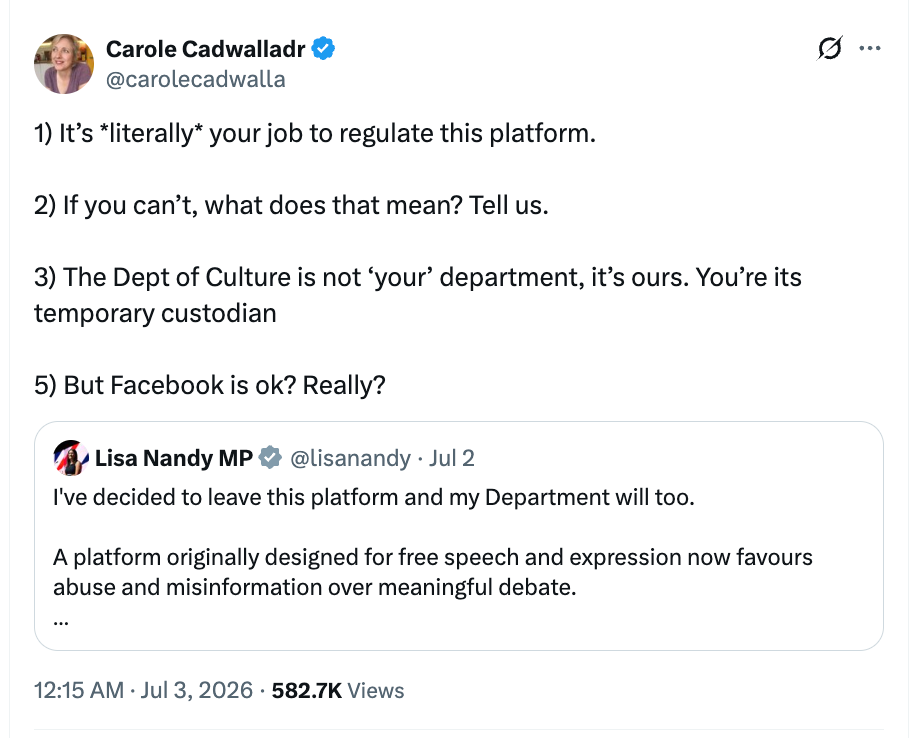
“Nandy needs to send a clear signal that she wants the regulator to go further, more quickly and fill the legislative gaps around disinformation and electoral interference,” Babbs of Clean Up the Internet said.
Meanwhile, Molly Rose Foundation’s Burrows is “cautiously optimistic” that Ofcom’s new Chair understands the need for a reset, but wants the government to install “victim-centred leadership” at the watchdog.
“This must be accompanied by legislation that fixes structural weaknesses in the Act and finally starts to build confidence that No 10 stands with victims and families, not beholden to corporate lobbyists,” Burrows adds.
A fixed game
Reforming Ofcom, however, only gets us so far. Expanding its remit does little to address the real crisis of a 20th-century watchdog trying to police a multi-trillion-dollar monopoly.
“Asking Ofcom to hold Big Tech to account by themselves is like asking referees to stop club owners fixing matches,” says Jim Killock of Open Rights Group.
“Ofcom regulates content and policies for content. But this is not the engine of the problems with Big Tech, which is monopoly and structural power.”
Giving Ofcom more powers and more duties will only get us so far while that monopoly remains intact, Killock argues. Real accountability means tackling the structural power of Big Tech itself and placing communities directly in control of competing information ecosystems.
The Media Reform Coalition recommends making standing citizens’ assemblies a required part of Ofcom’s operations, giving the British public a “direct and active role in decision-making”.
And some of the machinery already exists. Stop Funding Hate’s Wilson points to untapped powers under the Online Safety Act that allow the government to establish an independent adjudication system, a neutral process free from state or corporate ties that would let the public challenge platforms directly.
“This would give social media users a legal right to directly challenge Big Tech companies,” Wilson tells us. “It’s long past time to activate this.”
Though much about Ofcom’s future remains unanswered, one thing is clear. Ofcom, as we know it, cannot meet this moment. The Online Safety Act handed the regulator the mammoth task of holding some of the world’s most powerful companies to account. As confidence in its willingness to use those powers collapses, the choice facing Burnham’s government isn’t simply how to fix Ofcom, but whether it has the courage to hand democratic power back to the public.
About The Citizens Understand: In an era where technology is reshaping democracy faster than laws can keep up and power is increasingly exercised through platforms, Citizens Understand exists to cut through misinformation and make complex systems legible. If there’s something you’d like to understand, email lillian@the-citizens.com.