Locked Into America
As Europe scrambles to reduce its dependence on American tech, the UK accelerates down the same road

Welcome to the third edition of The Eye—our weekly guide to the shifting relationship between Big Tech and the state. We dig beneath the headlines, connect the dots, and follow the power to reveal how technology is reshaping our public institutions.
This week: NATOs Summit, military satellites and Europe's bid to build an off ramp from Silicon Valley tech.

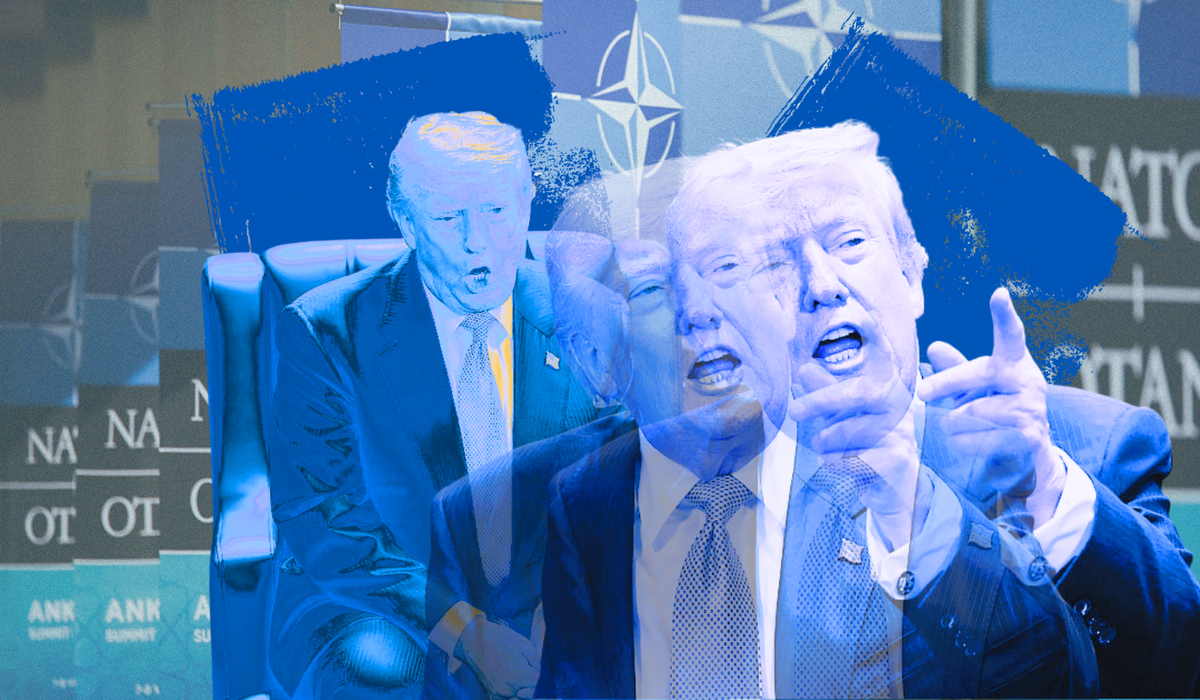
NATO had its annual summit this week. The conference saw European leaders increasingly spooked by Trump’s rampaging geopolitics, and repeated threats to withdraw US support for NATO. It’s not just about funding. The international defence establishment is in agreement that the future of warfare is digital - AI, autonomous weaponry, electronic warfare and data.
The US has a monopoly over frontier AI. So far, we have no alternatives. We’re locked into an ecosystem of tech, developed by (and for?) a country that is holding our geopolitical feet to the fire.
As trust in Washington erodes, European governments are scrambling to reduce their dependence on American defence technology and build something closer to genuine digital sovereignty.
Speaking ahead of the summit, Ursula Von Der Leyen and Mark Rutte said on Tuesday that NATO must “become more European” to “stay transatlantic”. Rutte said that “We cannot continue, as we did, being over-reliant on the United States. We need a much stronger Europe within a stronger NATO”.
Europe built its digital infrastructure assuming the United States would remain a reliable ally. Trump’s increasingly aggressive “America First” agenda, from renewed claims over Greenland to brinkmanship over Ukraine, has exposed just how risky that assumption was.
Replacing US tech will be an immense task. The US is able, at the very moment it is threatening to pull military support for Europe, to hold the continent over a barrel because American tech companies have a near-monopoly. This is creating a new form of strategic dependence, ecosystem lock in isn’t a software problem - it’s a geopolitical one.
This matters because software doesn’t just support military alliances anymore - it starts to shape them. If every NATO member trains on the same AI systems, plans operations using the same tools, and builds its defence infrastructure around the same handful of platforms, those products begin to define how allies work together. Standards emerge in a new way. That’s a subtle but profound shift. Military alliances used to be held together by doctrine - increasingly they are held together through technology. And unlike treaties or military strategy the roadmap for that software isn’t set by NATO or elected governments, it’s set by a handful of tech bros who bend the knee to Trump.
The Off-Ramp
If the United States controls so much of the technology stack, what does an off-ramp actually look like? Europe is now trying to find out.
This week eight NATO members (from which the UK is notably absent) launched an initial bid to replace part of the defence tech ecosystem - satellites. The network, involving Denmark, Canada, Finland, Germany, Norway, the Netherlands, Sweden and Turkey, announced plans to link military satellites into a “mega-constellation”, HALO (Hybrid Alliance Layered Operations in Space) to “overcome the cost, time, and coverage limitations of single-nation satellite fleets”.
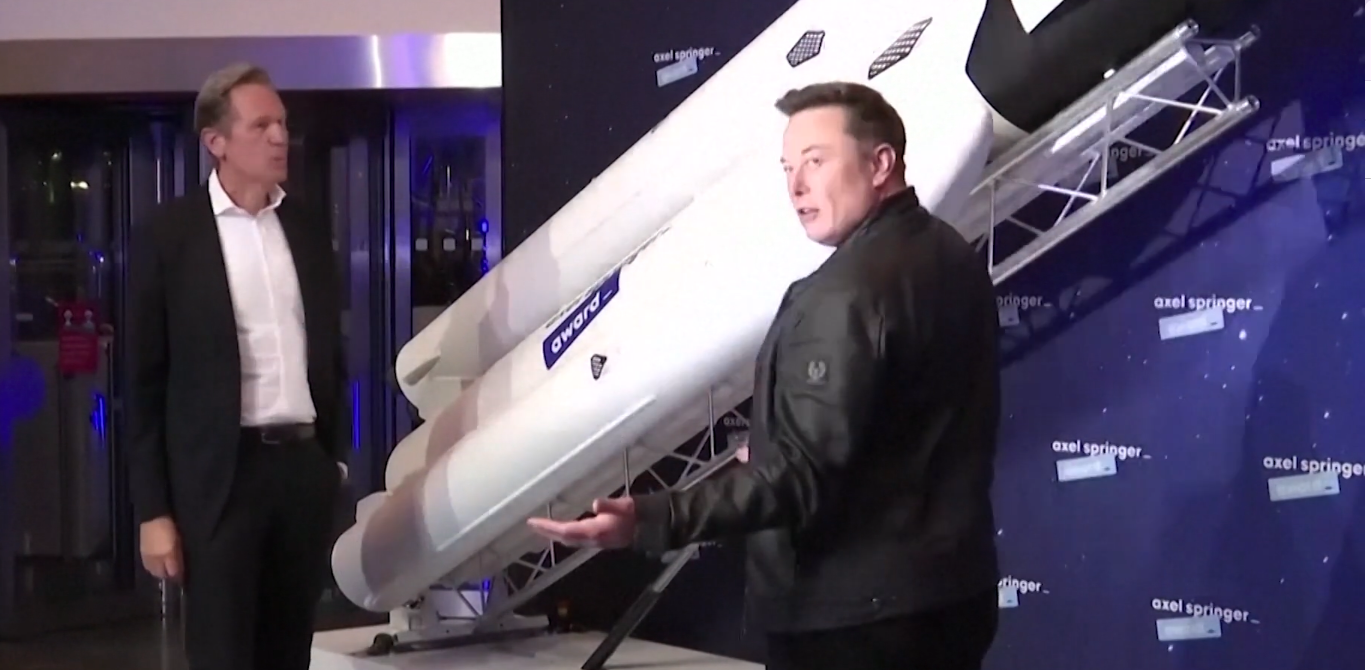
The plans would act as a potential alternative for countries currently relying on Elon Musk’s SpaceX Starshield (the military arm of Starlink) satellites. SpaceX satellites account for around 2/3rds of all active satellites in orbit, and NATO is heavily reliant on them. So much so that threats by Musk to cut off Ukrainian access to Starlink have reportedly been weaponised against Zelensky on behalf of the Trump administration as leverage in mineral negotiations.
The UK’s own sovereign satellite system - Skynet - is currently 2 years delayed.
NATO is signed up to Palantir’s Maven smart system, being used by the Americans in Iran for AI-powered missile targeting. Last week NATO’s Maven system became fully operational, however France is already testing its own AI battlefield technology - Arcadia - as an alternative to the US product. France is also replacing Palantir in their intelligence service and is one the few European countries with its own frontier AI lab - Mistral - positioning itself as an alternative to Chinese and US companies.
In the context of Europe’s wider economy, the European Commission published its Tech Sovereignty Package with Brussels now openly describing technological dependence as a strategic liability.
But huge questions remain about the ability to actually shift the balance, given the breadth and scope of US monopolisation. Currently three companies; Amazon, Google, and Microsoft, control 70% of Europe’s cloud market. One US company, Nvidia, provides up to 95% of the world’s GPUs. With AI hardware, software and infrastructure dominated by US tech companies, and without a targeted effort to tackle this stranglehold, value created by a European buildout could ultimately still flow back to the US.
The question now is whether EU states will go far enough, or replacements will happen at a scale required to actually achieve independence from foreign, particularly, American, technologies and systems.
As of today, 80% of the bloc’s digital infrastructure and technologies are imported from non-EU countries. The recently published EuroStack report, commissioned by the Bertelsmann Stiftung Foundation, proposes ‘increasing Europe’s digital sovereignty by reshaping its digital ecosystem with tech owned and operated by Europe for Europe’, in practice including cloud computing, electronic ID, APIs for data access, and more.
Notably, a growing number of European governments are pushing back against software supplied by Trump-aligned companies such as Palantir. That reflects not only longstanding ethical concerns about the company’s work, but growing unease at its increasingly explicit embrace of American geopolitical power. Earlier this year, Palantir even attempted to redefine “digital sovereignty” on its own terms, arguing that dependence on US technology should be seen not as a vulnerability, but as sovereignty itself.
But further moves are already underway at both bloc and state levels. The European Parliament has also switched its default search engine from Google to the French alternative Qwant, cities across the Netherlands, France, and Germany are moving away from Microsoft Office and Googledocs, the Dutch government is transferring from Microsoft-owned Github to its own repository, and Finland has reportedly decided not to move election data to Amazon’s cloud services, to cite just a few examples.
So far we’ve barely mentioned the UK. That’s because Europe is at least trying to build an off-ramp; Britain is still accelerating down the same road. Despite repeated warnings from parliamentary select committees, lawmakers and civil society about dependence on American AI and cloud infrastructure, the UK continues to anchor its digital future to the same handful of US technology companies. If Europe is asking how to escape ecosystem lock-in, Britain has barely acknowledged it’s locked in at all.
✊ Want to dig deeper?
Big Tech’s Hostile Takeover of Democracy—our conversation with Carole Cadwalladr, Roger McNamee, Sophie in 't Veld and Reinier van Lanschot—is now on YouTube.
If you're concerned about how much of our critical public infrastructure (the NHS, local councils, welfare system etc) now depends on a handful of US tech companies, this one's for you. Or watch on Substack here.
Until next week,
Max & Charlie
About The Eye: In an era where Silicon Valley is rewriting the rules of governance and unaccountable tech companies are capturing our public services from the inside out, The Eye exists to follow the power, connect the dots and reveal how technology is reshaping our state.