
The Eye 04: Data centres - a proxy flashpoint for AI resistance
In contrast to America, Britain’s data centre surge is only just starting. So is the resistance.


Welcome to the fourth edition of The Eye—our weekly guide to the shifting relationship between Big Tech and the state. We dig beneath the headlines, connect the dots, and follow the power to reveal how technology is reshaping our public institutions.
This week: Data centre surge, who really controls the cloud, and the beginning of the backlash.
Data centres have stormed onto the political scene in the US becoming an unlikely focus for the population’s fierce, nebulous bipartisan anger – so much so that data centres may be a decisive factor in the upcoming midterms and the potential toppling of Donald Trump.
Data centres are planned in 40 of the 69 most critical US midterm districts. The resulting battle over these server warehouses - and the vast swathes of farmland, native land and urban communities sacrificed to them have become a flashpoint for public rage against a system that’s putting the interests of machines over the masses. Only 14% of Americans would currently support a data centre in their area.
The UK, as usual, is catching the American wave late. Our data centre surge is just starting. So is the resistance. We’ve got 100 projects in planning or construction, with a further 200 in the wider planning pipeline. At the moment we have around 500 datacentres nationally, and some of the new sites will dwarf what we have. The largest approved site, in North Lincolnshire, is 1,000MW. The largest one at present is just 148MW…
The government has committed £4.5m to a team of experts whose job it is to help fast-track AI data centres by advising local authorities and giving grants as part of the UK’s Delivering AI Growth Zones plan, announced in Nov 2025 (DSIT).
In 2024, the government designated data centres as part of the country’s critical national infrastructure. In practice, this means the new growth zone strategy can give data centres “priority access” to scarce grid connection capacity, ahead of housing even, because they’re deemed so vital.
The Delivering AI Growth Zones strategy also offers hyperscalers discounted electricity, paid for by the UK government, set to launch in April 2027. The Government says it will pay a 500MW data centre up to £80m annually in electricity subsidies, each. This was announced two months after Trump’s state visit and a raft of UK-US tech deals.
Who controls the cloud?
The massive projected buildout comes with a host of associated potential risks and unaddressed issues, reflected in both national campaigns and community level resistance. Very real questions are being raised on the viability of locations, the cost to communities, transparency from government over projected plans, and issues of national sovereignty - who will ultimately control these structures, where will the benefits be felt?
For a start it’s worth asking: Out of 100 projects, how many will be owned by UK companies? The clues we have suggest almost none. Currently, the UK’s largest data infrastructure is entirely dominated by overseas capital. In London and the Southeast - which accounts for 80% of national capacity - the largest owner is Vantage Data Centers, majority-backed by the Singapore Sovereign Wealth Fund.
Meanwhile, Western Europe’s largest data centre (Equinix’s facility in Slough) and Digital Realty, which owns 13 massive sites across London, share the same two largest shareholders: BlackRock and Vanguard. These gargantuan US asset management firms hold the keys to where our national data lives.
As for the new rapid build-out ushered in by the UK government? That’s coming by the billion from Google, Microsoft and, despite retracting their flagship datacentre project, OpenAI. Nvidia are also big investors. (This week, because of grid delays, Nvidia announced their £2bn AI data centre in Essex might resort to on-site gas power).
This looks about as far from sovereign as you can get. US owned software running on US owned infrastructure which uses US hardware. While subsidising overseas providers of the technology, central to the backlash both in the UK and the US, is the cost both in monetary and resource terms, to the citizens of each country investing in the boom.
It’s been reported that AI data centre rollout could add as much as £150 to the typical household electricity bill per year due to strain on the grid. Energy bills already stand at a £913.71. While in the US, there’s a bill on the floor to legislatively force AI companies to foot the bill for ballooning energy costs - including the added cost of grid infrastructure.
No such high-level conversations are being had here in the UK.
Instead, two weeks ago the National Grid’s US-facing venture arm formed a multi-billion dollar strategic partnership with Chevron to build a new fossil fuel power station - bypassing the grid entirely to power a Microsoft data centre campus.
Contrary to what the term would have us believe, the cloud exists in the real physical world. These data centres are where the internet lives. Where AI proliferates in a hot, whirring mess of screaming wires and chips.
The National Energy System Operator (Neso), which operates the UK grid, estimates data-centre consumption to be 7.6TWh in 2025. Its own forecasting puts electricity demand anywhere between 30TWh and 71TWh by 2050. Data centres already consume 6% of the nation’s electricity.
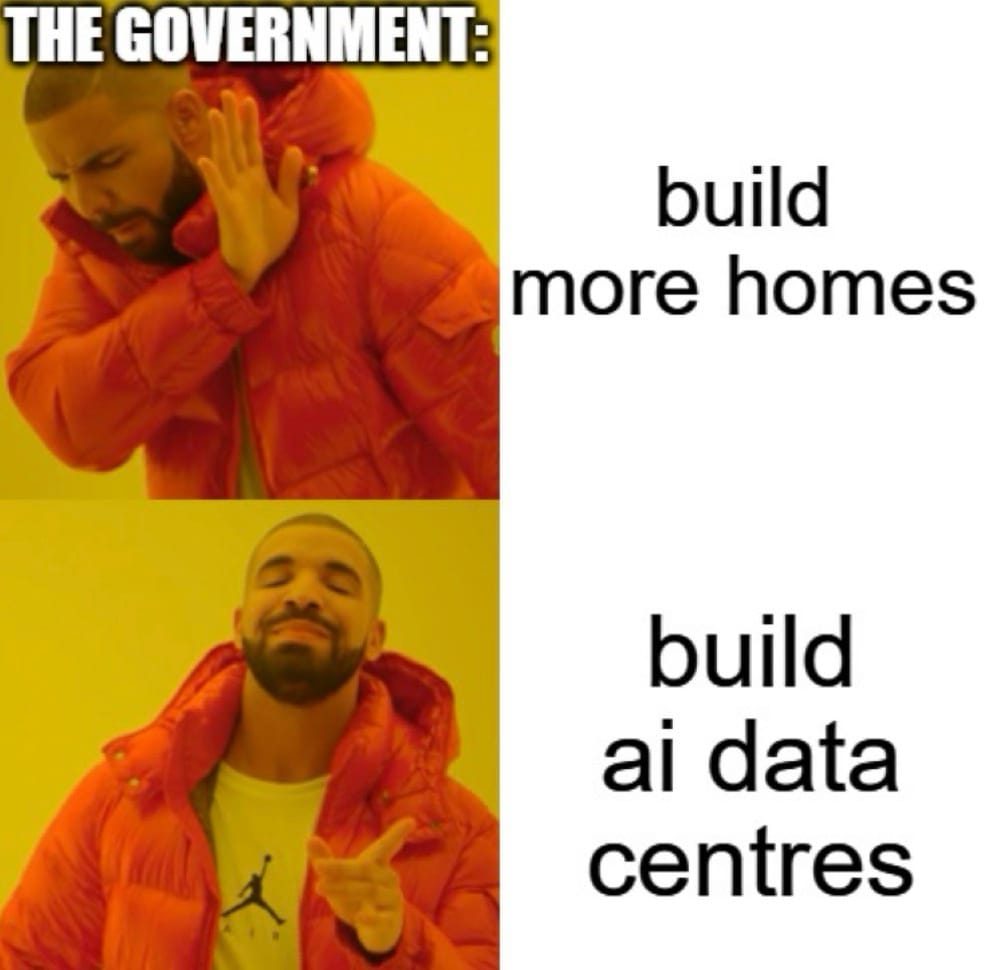
The grid is so strained that the added pressure by data centres is contributing to delays in the construction of desperately needed housing. Last December, the London Assembly published a report saying that data centres “make it harder and more costly to bring forward new homes… just as London’s housing crisis is at its worst”.
Then there is water. An investigation by Foxglove and The Times revealed UK data centres devour an estimated 10 billion litres of water a year, a figure completely absent from official water shortfall projections. With 84% of proposed sites located in areas already facing severe water stress, the Environment Agency has warned that combining summer heatwaves with these thirsty server farms is a recipe for disaster.
Then there is the heat island effect. Slough, which has become one of the largest hubs in the world for data centres - hosting between 30 and 40 facilities, and hosts Europe’s largest data centre, near Heathrow, has been reported to be pushing up local ambient temperatures by between 2C and 9C in some places.
Data centre discontent
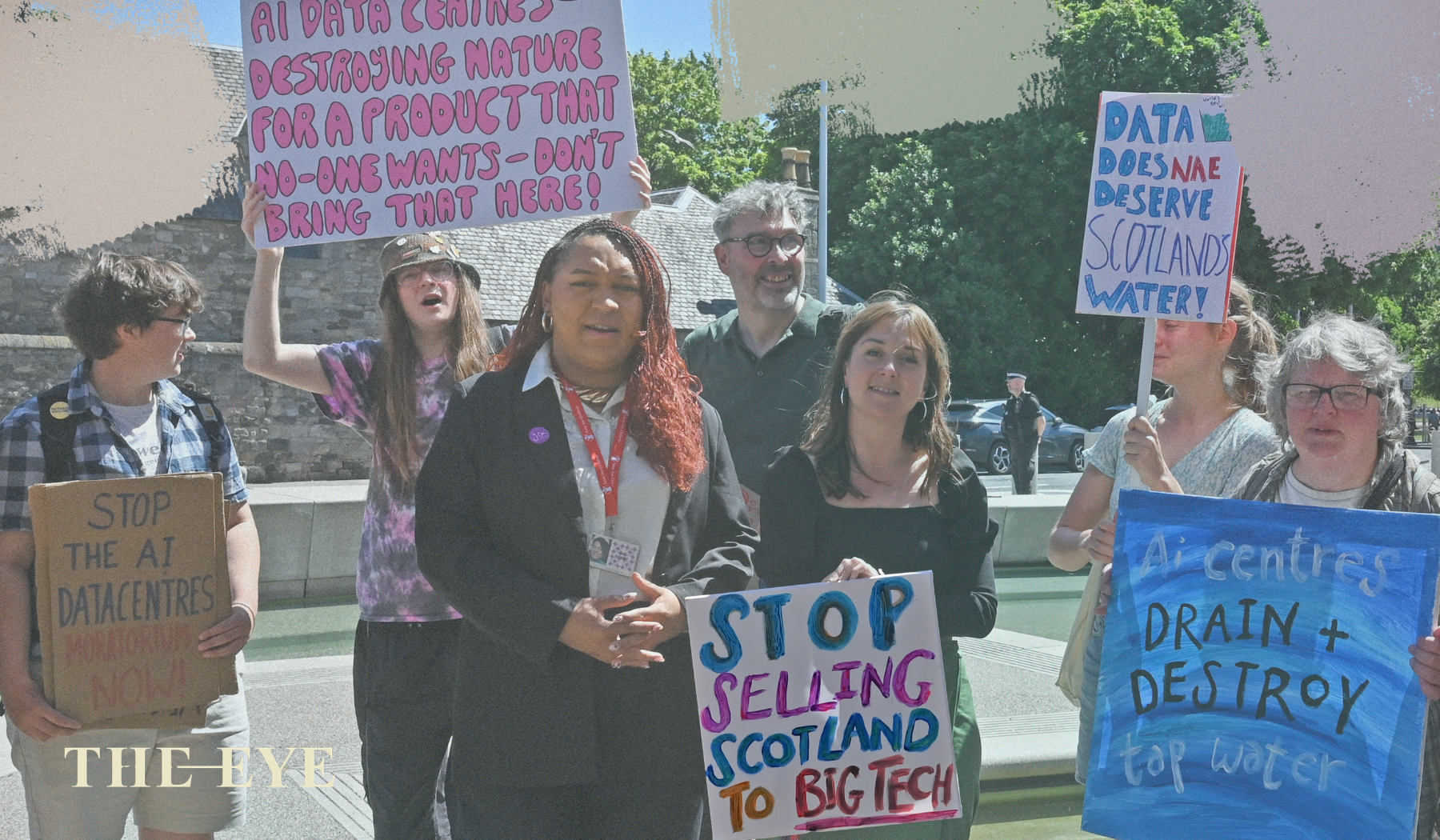
The country appears to be waking up to these escalating dangers. While nowhere near US levels of outrage - yet - this summer is seeing a wave of data centre discontent. As the country experiences record breaking days of extreme heat, local resistance is surging from coast to coast.
In South Wales a petition against a local Pontyclun facility quickly gathered over 1000 signatures. In Kent, Southfleet villagers are fighting a massive 145-acre development, while over 5000 Norwich residents have signed a petition to stop a site proposed near their local marshes.
This joins fierce urban resistance in East London where community campaigners took to the streets to protest a proposed new centre being built for high frequency trading at the historic Old Truman Brewery site on Brick Lane. Days later, hundreds of farmers, local environmental campaigners and other residents staged two days of action against a £13bn datacentre near Torrington, Devon.
While these local groups are hitting the streets, the government is quietly changing the rules of the game to silence them. In July 2026, ministers used the new Planning and Infrastructure Act to completely scrap mandatory pre-application public consultations for major infrastructure developments - including mega-data centres. To save developers a projected £1 billion, communities have essentially lost their legal right to a warning before these energy-devouring monoliths apply to move in next door.
This won’t be an easy fight to win given the goliaths we’re facing up against. The US started out small too. So far, they’ve already successfully halted $130bn of data centre construction projects...
Thanks for reading! We are developing this as we go, and we want to build it with you. Leave us a comment, tell us what’s working, what’s missing, and what you want to see more of.
See you next time,
Max & Charlie
About The Eye: In an era where Silicon Valley is rewriting the rules of governance and unaccountable tech companies are capturing our public services from the inside out, The Eye exists to follow the power, connect the dots and reveal how technology is reshaping our state.