
The Eye 07: Millions face hosepipe bans as government pushes ahead with data centre boom
As England runs dry, campaigners tell The Citizens why government's AI ambitions are putting our shared resources at risk

Welcome to the seventh edition of The Eye—our weekly guide to the shifting relationship between Big Tech and the state.
This week: Historic drought, AI’s growing thirst and campaigners pushing back.
As England endures a historic drought, experts warn that the government’s plan to triple AI data centre capacity by 2030 will heavily strain water supplies - largely because official forecasts completely ignore data centre water usage.
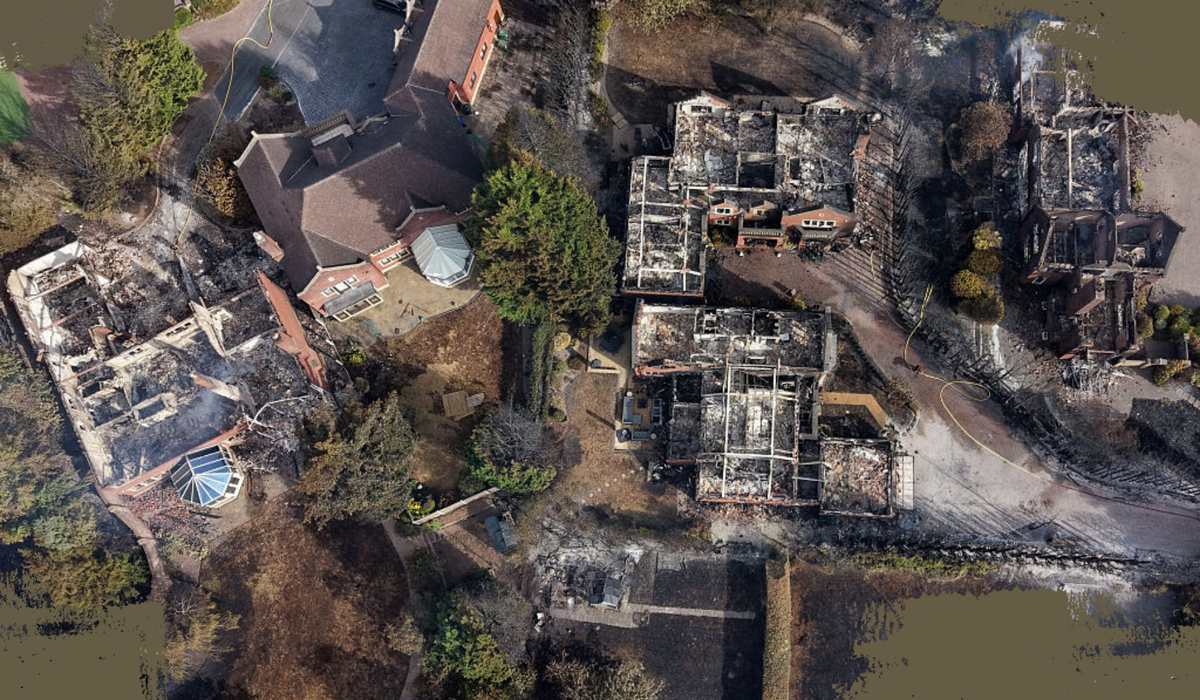
More than 26 million people are living under hosepipe bans as England experiences what experts warn could become its worst drought on record. Crops are failing, reservoirs shrinking and firefighters are battling wildfires during the fifth heatwave of the year.
The Fire Brigade’s Union has issued a warning that it is facing an “unprecedented summer of dangerous and volatile wildfires”, that have become so extreme the government issued an emergency alert over the threat on Friday evening, warning people not to light anything that could spark fires and further strain resources. Five reservoirs in England and Wales are now ‘exceptionally low’ as the severe drought continues.

AI expansion on the scale proposed by the government risks ramping up water scarcity further than it already is, with 84% of data centre developments proposed in areas that are water stressed, or projected to be by 2040, with climate change, population growth, and aging infrastructure all contributing factors to shortages.
Water UK - the trade body representing Britain’s water companies - has called the government’s AI growth plans “fatally flawed”. It warns that the country may not have enough water for future data centres, pointing to the fact that existing water forecasts “explicitly exclude” them.
In July, the organisation stated that there was only enough spare water for 420,000 of the government’s target of 1.5 million homes, with some parts of the country only having a 2% buffer between what is needed and what is used.
It added that, in projecting future business demand for water resources to rise, including water-intensive industries such as data-centres, which are excluded from the Environmental Agencies national framework for water resources, this use isn’t currently being accounted for. Recent reports indicate that data centres could also be given water priority during heatwaves.
Campaign groups like Global Action Plan, who have been leading the call to stop polluting data centres draining communities of valuable resources, have warned that “water scarcity is no longer a future risk; it is a near-term reality”.
In their recent report “Not a Drop to Drink”, they highlight that data centre water demands “rival those of towns and cities”, and that “a single mid-sized data centre can require as much water each year as several thousand UK households”.
The group cites that “across the UK, communities are continuously being told to reduce their water use, while at the same time vast new digital infrastructure is being built with little scrutiny of its hidden demand. This raises fundamental questions about who gets access to our shared resources, and who bears the cost”.
Speaking to The Citizens, a chorus of campaign organisations spoke out opposing the government’s data centre plans and echoing the concerns raised.
Greenpeace UK’s chief scientist Dr Doug Parr told us that “If all the data centres in the UK pipeline were built, they’d use as much electricity as the entire country’s peak-time consumption. We know what an unchecked AI boom can lead to because it’s already happening in the US: higher energy bills, more stress on water supplies and a new lifeline for fossil fuels”.
He added that: “We need more transparency about the amount of water and energy used by data centres, proper environmental impact assessments, and a ban on new polluting plants being built to power AI”. Reports from earlier this year indicate that more than 100 proposed new data centres plan to burn on-site gas to generate their electricity.
Patrick Galey, head of investigations at Global Witness, said that “What most concerns me, and what ought to concern everyone, is that we are already in the teeth of a climate breakdown”.
“We should be doing all we can to stop making that problem worse, and massive, gas spewing, water vaporising data centres for fake text generations are making the problem worse while diverting desperately needed attention, innovation and funding away from climate mitigation. They [data centres] are the worst possible option, at the worst possible time”.
Global AI-related water withdrawals could climb to 4.2–6.6 billion m³ per year by 2027, which is more than the entire household usage of the UK, but in the UK data centres are not required to disclose how much water they use. Water UK’s criticism of the government includes claims that in its policies for the AI Growth Zone strategy, AI for science strategy, and AI opportunities plans, they make “not a single mention of water”.
Speaking to The Citizens, a spokesperson for Pull the Plug explained that: “data centres demand huge amounts of electricity and temporarily non-renewable water. According to a University of Oxford study, a 1-megawatt data centre (generally considered small to medium), uses enough electricity to power 1,000 houses and can use 25.5 million litres of water annually”.
Pull The Plug joins others in pushing for the public to be given greater consultation, where it says it feels as if they have “not been consulted at all”.
Oliver Hayes, head of policy & campaigns at Global Action Plan, added that: “With reservoirs shrinking and fires raging as climate breakdown bites, our water supply has seldom felt more precarious. So seeing the Government go all-in on AI data centres – which consume grotesque quantities of water both for cooling and in power generation – is difficult to stomach”.
“Worse still, as the rest of us face hosepipe bans, the Govt has given data centres special protection from any restrictions to their water supply by designating them ‘critical national infrastructure’. In any sane world chatbot factories would be at the back of the queue for drinking water, but in Britain in 2026 they are apparently in the VIP lane.”
The Citizens has already highlighted that these behemoths are being given priority access to grid connection, even ahead of housing, also offering hyperscalers discounted electricity, top-end estimates suggesting that data centre rollout could add as much as £150 to UK household bills.
Legal campaign group Foxglove told The Citizens that: “The central concern is that data centres come with huge environmental and social costs, and without action from the government, these will be shouldered by the public - rather than the vastly wealthy tech companies behind the data centre boom. Those costs are driven by the huge resources data centres use: the new, ‘hyperscale’ facilities can each use the entire output of a full-size gas power station.”
They added that government at both local and national level has the power to stop the buildout where the demands of the industry can’t be met, and that “the UK and devolved governments need to ensure that data centres “must not be built without concrete requirements that they do not put further pressure on water supplies.”
Communities in the US have shown the political force of organised local resistance, with bipartisan pushback and local outrage at the projects leading to over 500 local bans on new data centres. Community pushback is now being factored into AI centre financing plans, a huge win in the impact local resistance can achieve throughout the system.
Here in the UK a similar movement could emerge. We are seeing local groups from Iver to Brick Lane organising protests, while the SNPs national council has called for a temporary moratorium in Scotland, citing the need for “a proper piece of work at the government level to decide how many the country needs”.
Global Action Plan calls upon the government to ‘Stop Dirty Data Centres’, and communities are signing local petitions to halt expansion in their areas as they emerge.
With Whitehall pursuing a threefold increase in AI data centre capacity by 2030 - before we build the infrastructure the AI industry wants, ministers must prove that the country has the water and energy it needs, and that the public won’t be left footing the bill.
Thanks for reading! We are developing this as we go, and we want to build it with you. Tell us what’s working and what’s missing below.
About The Eye: In an era where Silicon Valley is rewriting the rules of governance and unaccountable tech companies are capturing our public services from the inside out, The Eye exists to follow the power, connect the dots and reveal how technology is reshaping our state.