Wes Streeting, Palantir and the corporate capture of the NHS
As Health Secretary, Streeting handed our data to Palantir, deepened privatisation of our NHS and was a close ally of Peter Mandelson. Is this the blueprint for Labour’s future?

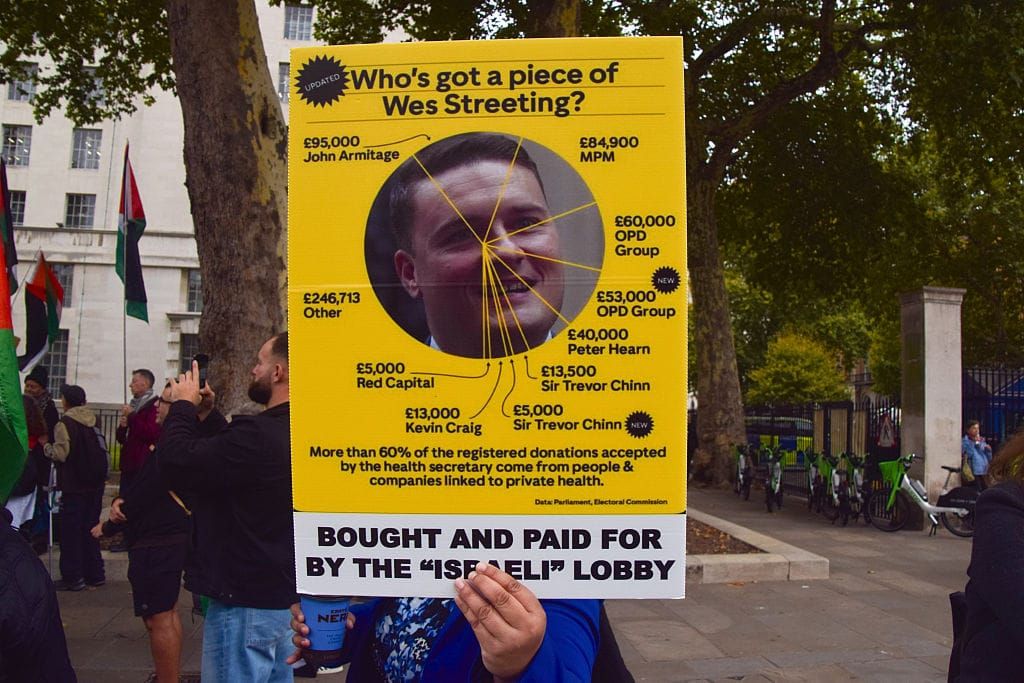
By quitting the cabinet and calling for the Prime Minister’s head, Wes Streeting has traded his role as Health Secretary for a high-stakes gamble for Number 10.
His leadership ambitions have long been discussed in Westminster, yet, for all his talk of vision and direction, Streeting’s tenure tells a different story. It is a record less defined by the public rescue of the NHS and - instead - one marked by a deepening culture of secrecy, the rise of the political lobbyist and a fundamental pivot toward corporate control over our most sensitive public infrastructure.
In this edition of the Citizens Understand, we look at the legacy behind the potential leadership bid.
📲 The Mandelson messages
Streeting’s resignation letter followed a familiar script, balancing his own wins with a stinging critique of Keir Starmer, highlighting the cutting of the winter fuel payment and the PM’s infamous ‘island of strangers’ speech. Noticeably absent, however, was any mention of Peter Mandelson.
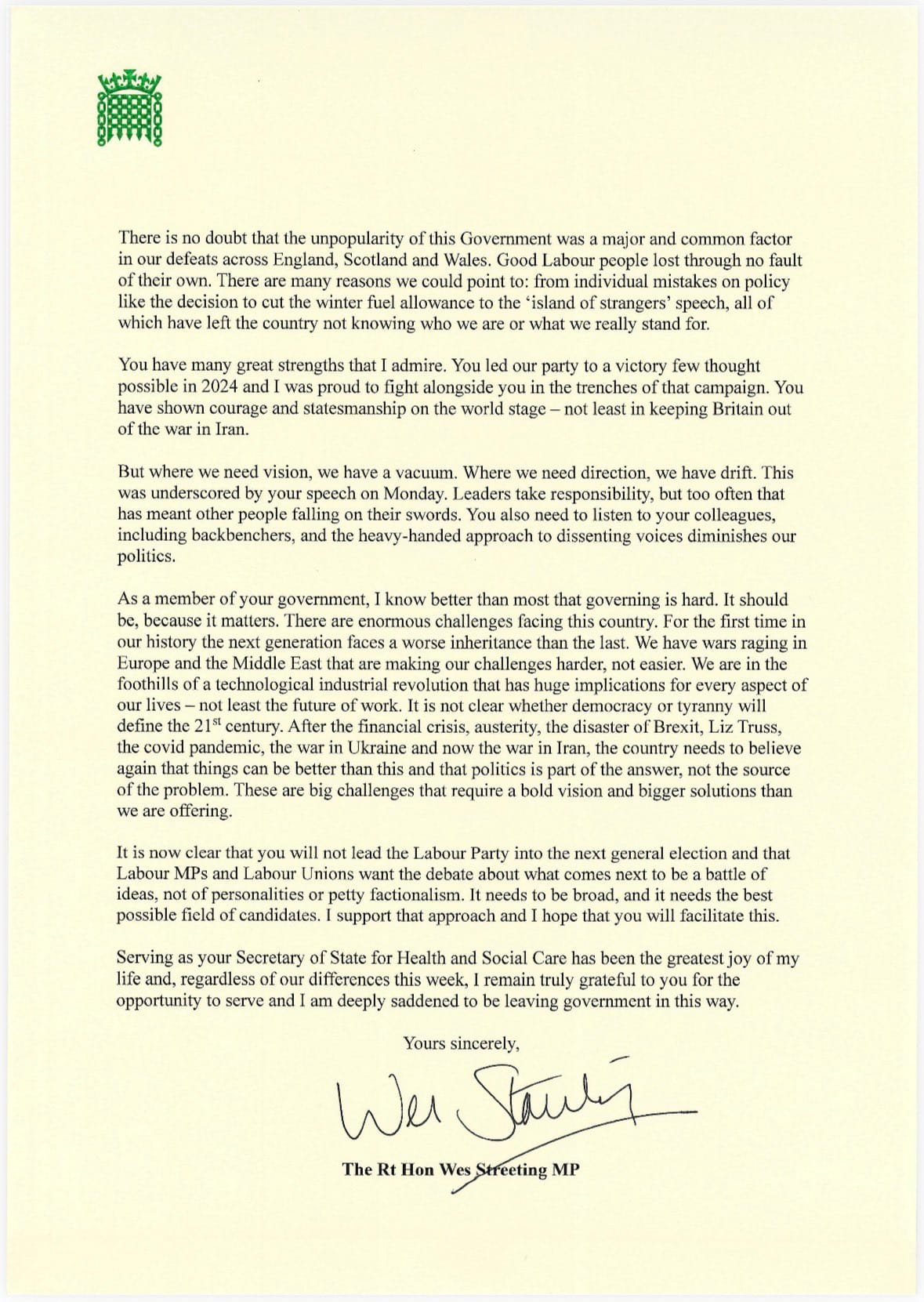
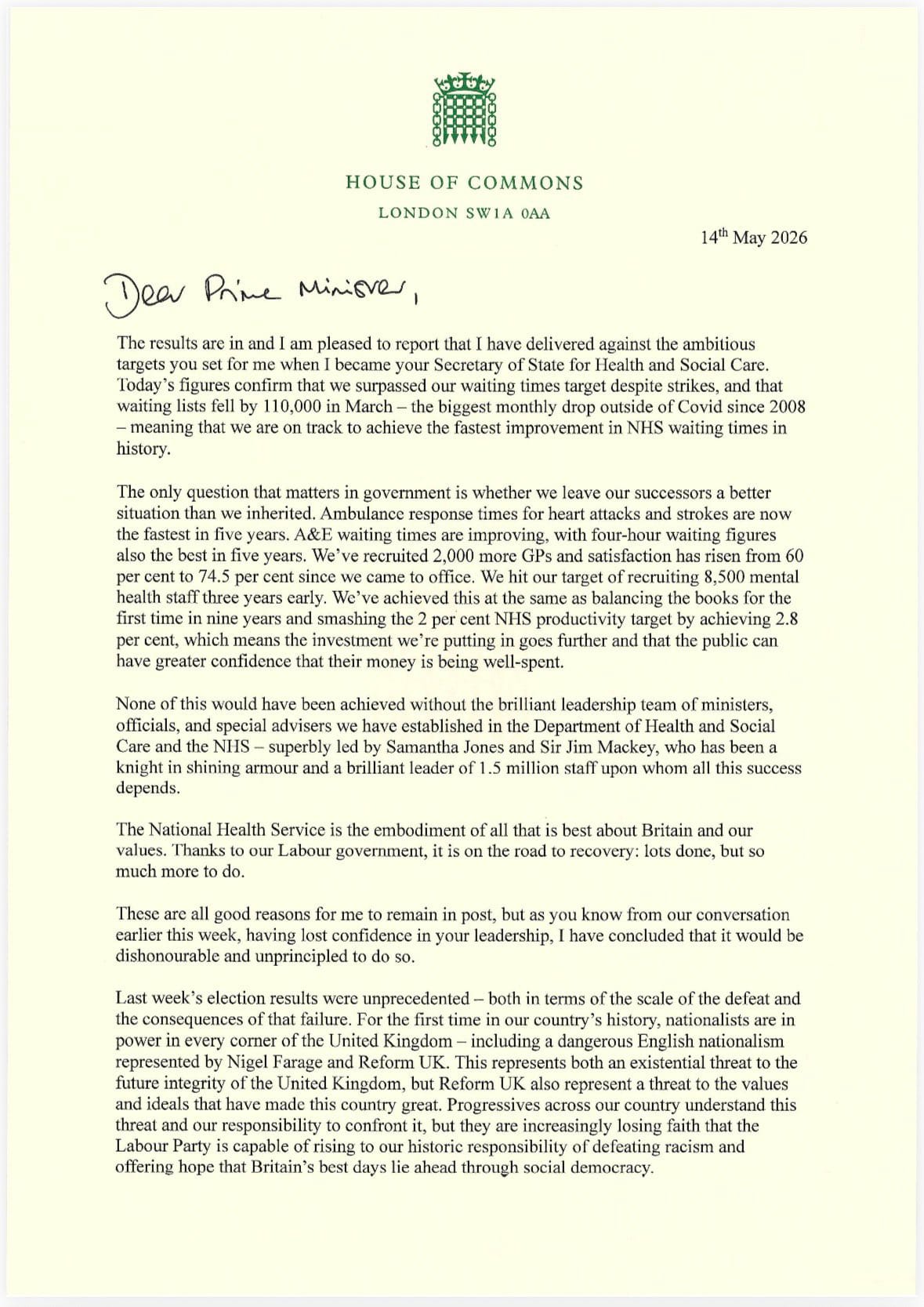
Wes Streeting's resignation letter
The former Health Secretary has spent recent months trying to publicly distance himself from Mandelson, the disgraced Labour grandee now under criminal investigation over alleged links to Jeffrey Epstein.
This was most obvious in February, when Streeting released private WhatsApp messages between the pair in an apparent attempt to draw a line under the relationship, insisting in the Guardian that he “knew him but not well”.
The exchanges reveal regular calls and texts between the two, with Mandelson privately advising the health secretary on pharmaceutical policy, looming US trade tensions and meetings with American tech companies. There were even some kisses.
In one exchange, Mandelson warned Streeting that a “pharma tariff crisis” was approaching. Shortly afterwards, Starmer and Streeting agreed to a US-UK drug pricing deal that will see Britain pay significantly more for new medicines by 2030, which led Liberal Democrat deputy leader Daisy Cooper to accuse government of rerouting money from frontline NHS services “into the pockets of big pharmaceutical companies”.
Elsewhere, Mandelson encouraged Streeting to visit the United States, telling him there would be “lots of tech companies and people” for him to speak to.
During this period, Mandelson still held a significant stake in his lobbying firm, Global Counsel, which had been hired by Palantir specifically to help them navigate UK government procurement and “advance its business interests”.
👀 What Streeting won’t publish
As Palantir’s role inside the NHS has expanded, so too have concerns over secrecy, transparency and patient data. Despite internal fears of a ‘loss of public confidence,’ just this week Palantir staff were granted access to identifiable NHS patient data, according to the FT.
It is a move that validates years of warnings that Palantir - a company whose values are fundamentally at odds with the NHS - has no place in public healthcare.
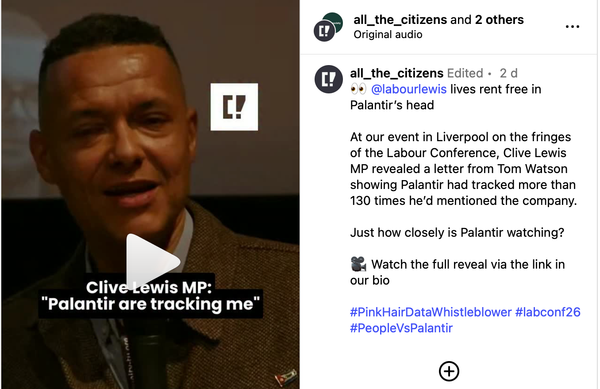
In a fight to unearth the truth behind the £330m contract, Democracy for Sale filed an FOI for the Palantir briefings sent to Wes Streeting last March, which the government refused to share.
This added fuel to the fire ignited when the contract was first made public - a document so shrouded in secrecy that more than 400 of its 586 pages were redacted.
Now, alongside the Good Law Project, Democracy for Sale is taking the government to court to force transparency, insisting that both the use of taxpayer funds and the handling of NHS data must be brought into the light.
👀 Psst - We’re cooking up a very special edition newsletter all about - yes, you guessed it - Palantir. Subscribe to get it in your inbox.
🔎 Our analysis
As Health Secretary, Streeting had a rare opportunity to begin rebuilding the NHS as a full public service. Instead, his tenure saw deeper marketisation and growing private sector influence over healthcare, with an estimated £1.6bn lost to private profits in the NHS over just two years - enough to fund more than 9,000 doctors or nearly 20,000 nurses.
The Mandelson messages, Palantir’s rapid expansion, and the creeping marketisation of the NHS signal a deep-seated rot in our political landscape. A model that treats the health service as a corporate playground, reimagining public infrastructure not as a safety net, but as a frontier for private extraction, where corporate leverage and technological surveillance consistently sideline the public interest.
If Streeting is serious about becoming Prime Minister, then his record deserves far greater scrutiny. His time as Health Secretary was defined not by restoring democratic control over public healthcare, but by embedding private interests and powerful tech infrastructure even deeper into the systems Britain relies on to function.
✊ How to fight back
Palantir could soon be handed the contract for the NHS’s proposed Single Patient Record, a system that could centralise vast amounts of identifiable patient data.
Foxglove is urging you to email your MP and demand Palantir is kept well away from the Single Patient Record.
For the last few years, Good Law Project has been following the paper trail behind the NHS’s £330m contract with Palantir.
Now, its new four-part investigative podcast pulls back the curtain on the battle over our health data.
👉 Listen to The Shadow Contract here.
See you next time,
Team Citizens
About The Citizens Understand: In an era where technology is reshaping democracy faster than laws can keep up and power is increasingly exercised through platforms, Citizens Understand exists to cut through misinformation and make complex systems legible. If there’s something you’d like to understand, email lillian@the-citizens.com.