Five Years of Standing Up to Power
2025 marks 5 years of the Citizens taking on the tech-bros and their enablers. Here’s exactly what we’ve done.

When we started the Citizens back in 2020, the problem felt obvious but bloody difficult to stand up to. Social media was breaking everything. Disinformation was outrunning facts. Outrage was the business model. Governments were slow, opaque and increasingly allergic to explaining themselves. And in a once-in-a-century crisis, power was being centralised just as public trust was collapsing.
We landed in a moment where disinformation and government secrecy collided - with disastrous consequences for public health. When the UK government refused to say who was advising it during COVID, and made decisions while hiding the evidence, we built Independent SAGE - an independent coalition of experts offering public briefings - transparent, evidence-based guidance.
We held our first public meeting. That same day, the government named the members of SAGE and started releasing the science behind its decisions… coincidence…? We think not.
Independent SAGE wasn’t about replacing the government. It was about insisting that expertise matters - and that the public has the right to hear from experts in the open.
For three years, hundreds of thousands of you tuned in weekly. Not for spin or reassurance, but for honesty - about what was known, what wasn’t, and what political choices were being made anyway.
Join thousands of others supporting independent scrutiny of power.
When platforms became power
By 2020, it was already obvious that Big Tech wasn’t just a handful of companies. It was an unelected layer of governance - shaping elections, moderating speech, amplifying harm, then marking its own homework.
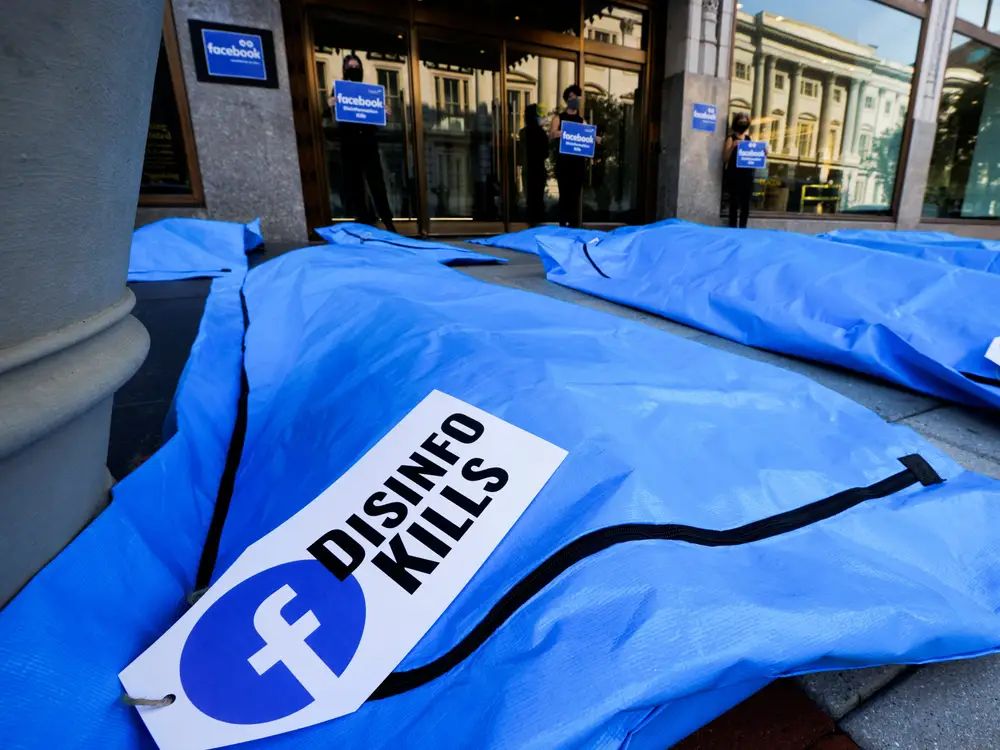
So when Facebook rolled out its Oversight Board - a kind of corporate accountability theatre - we built something deliberately public, global and fast.
The Real Facebook Oversight Board (RFOB) brought together civil rights leaders, technologists, journalists and researchers across six continents. Not to advise Meta quietly, but to intervene in real time - during elections, platform crises and disinformation events.
Before launch, Facebook tried to close us down. We went ahead anyway. When we published our election demands - including changes to how the algorithm amplified political content - Facebook quietly adopted two of them.
RFOB reframed breaking stories within hours. It gave journalists language and context when platforms stalled or obfuscated. It made visible - again and again - the gap between corporate power and democratic accountability.
By 2024, as elections took place across dozens of countries, the same disinformation tactics appeared - again and again - across platforms and borders, often aligning with state interests. What looked like a platform failure was, in fact, a geopolitical strategy.
Disinformation as statecraft
As platforms became infrastructure, information warfare became strategy. We began a long, often lonely campaign on foreign interference because - it seemed - no one else was prepared to see it through.
We convened a cross-party group of MPs and peers, including Ben Bradshaw, Caroline Lucas and Alyn Smith, who called on the government to investigate interference in our democracy after the Russia Report found credible evidence of Russian interference in UK elections. It marked the first time sitting MPs brought an action against the state.
That work led to a landmark ruling at the European Court of Human Rights this July, establishing that states have a “positive obligation to protect democracy from covert influence operations”.
It’s a critical win - and the basis on which we are now pressing the government to show whether, and how, it is meeting that obligation. We are still seeking a full public inquiry, and our appeal continues at the Grand Chamber, the highest Human Rights court in Europe.
Alongside the legal action, we told the story. The investigative podcast Sergei and the Westminster Spy Ring reached #1 on Apple Podcasts UK, drew more than 600,000 listeners and won an award!
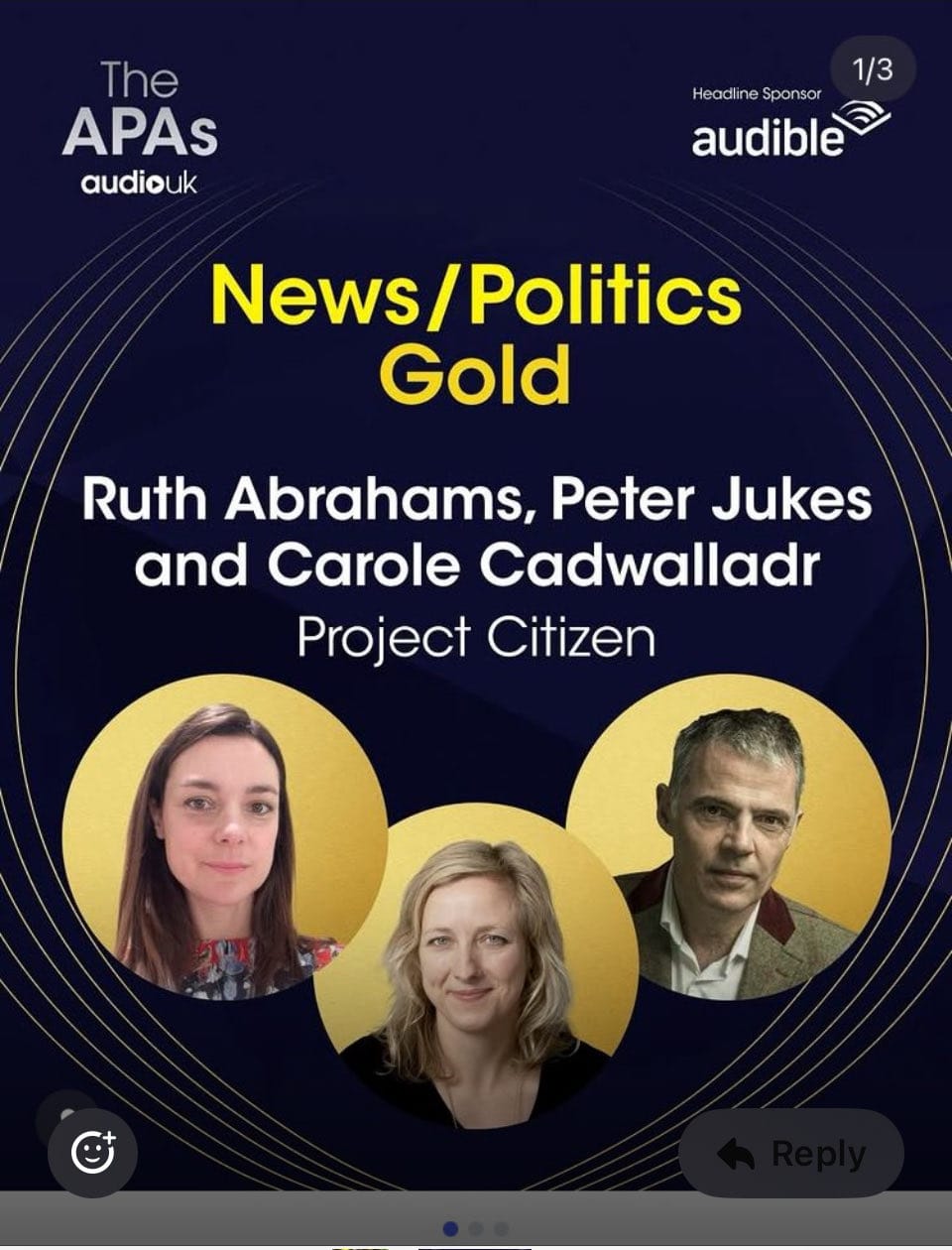
Hosted by Peter Jukes, Carole Cadwalladr and Sergei Chirsto, the series made foreign interference concrete rather than abstract - turning a question successive governments had avoided into something the public could grasp, debate and demand answers on.
Help sustain this work. Join the Citizens today with 50% off membership.
Turning evidence into consequence
We built an accountability pipeline from investigation to litigation. Through a sustained investigation into COVID procurement - Keeping the Receipts - we exposed politically connected contracts and documented cronyism long before the mainstream media caught up.
That work produced the evidence behind a successful legal challenge in 2023 to PPE contracts awarded to Supermax, a company handed vast public funds while operating in breach of human rights standards. We won.
Alongside this, we ran an extensive Freedom of Information investigation into ministers’ use of disappearing WhatsApp messages. That evidence formed the basis of a separate legal action, forcing the government to confront secrecy as a governing practice - and to treat private messaging as a matter of public accountability.
Staying present while power shifts
By the time AI arrived at scale, we were under no illusions. Regulation was not keeping pace. Governments were hedging - balancing trade relationships with the United States, and facing intense corporate lobbying, and the promise of economic growth against the need for public scrutiny and control. An increasingly powerful technology sector, with deep ties to capital, infrastructure and the state, shaping the terms of debate.
Power doesn’t just operate through law or platforms. It operates through attention: what people see, when they see it, and who gets to explain what’s happening as events unfold. How do you document truth under these conditions?
We built our own channels. We made films - a lot of them. Short, sharp pieces watched millions of times. We took things designed to be opaque and made them legible: surveillance, disinformation, platform governance, democratic risk.
Alongside Doc Society, we convened filmmakers, funders and technologists to think about how culture confronts digital power.
With filmmaker Asif Kapadia, we launched the global impact campaign around 2073 - to show how surveillance, automation and democratic erosion already intersect, and to give people a shared language for what’s coming.
We kept convening. Online events in the middle of elections. Emergency briefings when platforms were on fire. Big public sessions whenever politics lurched or fractured. And you kept turning up - tens of thousands of you - not for hot takes, but for grounding. For context. For analysis.
And we wrote. Our newsletters - Citizens Re/United and The People became a place to think in public, connecting dots between tech and geopolitics, platforms and the state, AI systems and long-standing questions about power and accountability.
What five years changed
Across five years, the shape of power has evolved. It began with social media chaos. It moved into platform governance. Then into geopolitics. Now it’s embedding itself into AI systems and cultural infrastructure - faster and deeper than we can often even comprehend.
Each time, we didn’t pretend one tactic would be enough. We built what was missing. Independent expertise when the government closed ranks. Public oversight when platforms refused accountability. Long-term legal pressure when outrage faded. Cultural work when policy language failed. Ongoing analysis when attention moved on.
We did this because democracy now demands constant adaptation.
Why support us now
The next phase will be harder than the last.
AI systems are being embedded into public institutions, media, policing, welfare and borders. Governments are outsourcing judgment while avoiding accountability. And the space for independent scrutiny is shrinking.
This is the moment when civic infrastructure either scales or disappears. Supporting the Citizens now means sustaining the capacity to respond as power shifts again.
We don’t take money from Big Tech - and we don’t stop when things get uncomfortable.
What we build only exists because people decide it should. If you want this work to exist five years from now, now is the time to support it.
To make it easier to join us, we’ve put a limited-time 50% discount on all memberships. You can support the Citizens for just £2.50 a month or £30 for the whole year.
If you want to go further, you can also become a founder for just £45 which will help sustain our work even longer term.
Prefer a one-off contribution? You can do that too, if a subscription isn’t for you.
If you’ve read this far, thank you. Supporting this work - at any level - is how it continues.