THE END IS A BEGINNING
Some news … and sadly not the kind you pop open the champagne for.

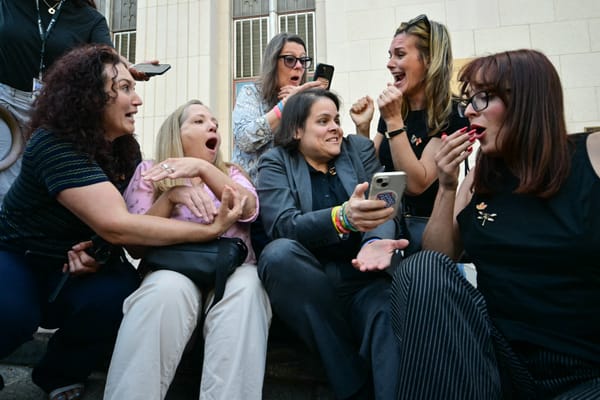
The Grand Chamber of the European Court of Human Rights has rejected our appeal in the Russia disinformation and foreign interference case.
Exhale. Sob. Inhale. Sob. Exhale. Sob. Get a grip pep talk. New plan.
We appealed last summer after an earlier ruling that confirmed something we’ve been saying for years (5 of them - through the courts) that large-scale disinformation and foreign interference are threats to democratic life, and that states have to deal with it.
That’s not nothing - it proves we aren’t insane conspiracy theorists - and the threat is real not imagined. It also shows us that there are limits to how far the ECtHR is willing to go in forcing the UK to confront it. Would an international court tell the UK it must hold a full public inquiry into interference in its own democracy? Apparently not… good to know. 🙂
So this avenue has been closed to us… but at almost the exact same time a new one has opened.
Before getting to that, I wanted to remind myself - and you all - why this matters.
The Citizens is a small organisation. We don’t have endless money or endless capacity, and we have to choose our battles carefully. So we’ve been asking ourselves the honest question: do we keep going with this? Getting a public inquiry takes years. Pushing for this soaks up time and attention. It pulls us into a slow-moving institutional process while the political world outside keeps shifting.
Our 50% discount is still live. Until 31 January, you can support the Citizens for £2.50 a month or just £30 for the year.
In the UK, major accountability failures don’t get resolved quickly - they get resolved eventually. The Post Office scandal took around 15 years from the first organised legal action to a public inquiry capable of establishing the truth. Hillsborough took over 25 years before official narratives were overturned. Bloody Sunday took nearly 40 years from the killings to a final report. The infected blood scandal took four decades before the state fully confronted what it had done. Even Grenfell - with immediate public outrage and political consensus - took 7 years to reach full findings. When governments say “looking back will take too long,” what they really mean is that they’re choosing to delay accountability - and history shows that delay only makes the reckoning longer and more painful.
Let’s be clear what this reckoning actually is: Brexit.
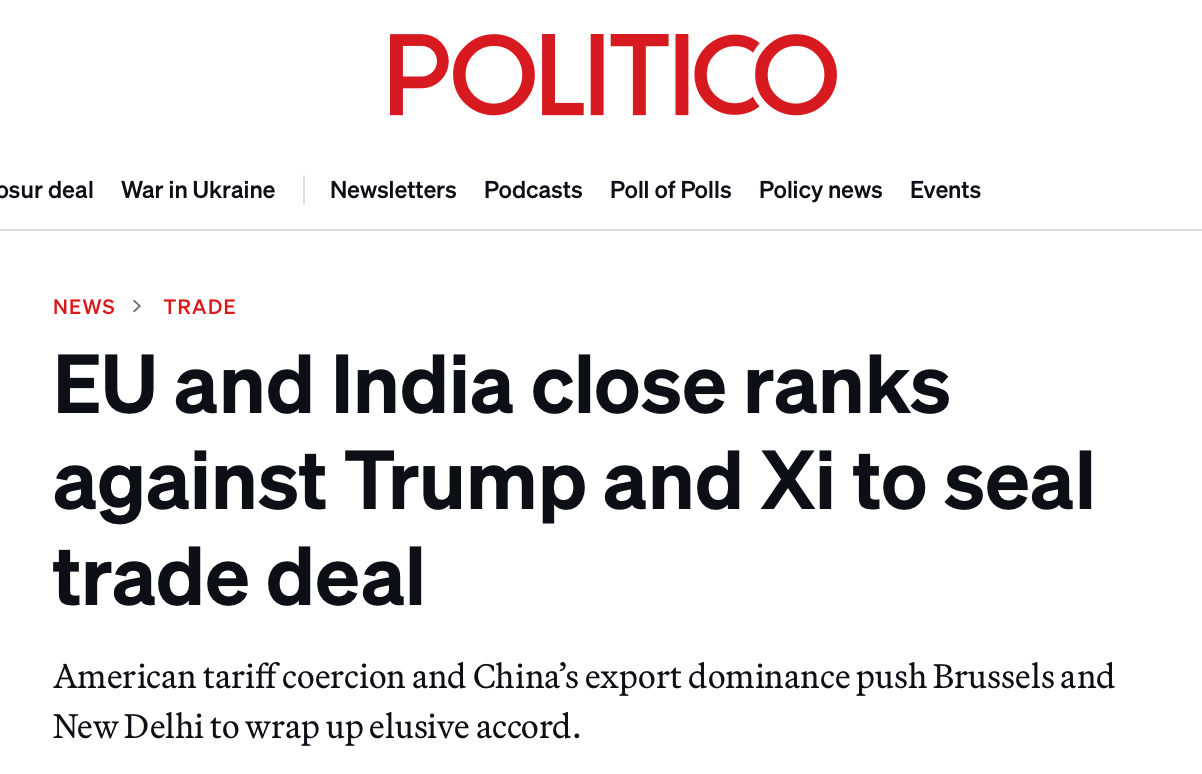
Brexit ruptured and reshaped the country’s economy, politics and place in the world. Look at yesterday’s European Union–India trade deal and the fallout is obvious - the mother of all deals … and we aren’t part of it.

Von der Leyen’s statement reads like a not-so-thinly-veiled f*%k you Donald Trump - rules still matter, alliances still matter, scale still matters - and it is possible precisely because Europe is acting as a bloc while Britain watches from the sidelines.
I write this fully aware that Narendra Modi presides over a deeply troubling human-rights record: the erosion of press freedom, the entrenchment of Hindu nationalist populism, the targeting of journalists, critics and minorities.
But the fact that Modi is now the more predictable negotiating partner vs Trump tells you how far geopolitics has shifted…
The hard truth is that years of the EU stalling negotiations over human rights, the environment and labour conditions, all ended up being deprioritised to get this deal over the line because the alternatives are far more unpalatable.
This isn’t an endorsement of authoritarianism; it’s an indictment of Trumpism - and a reminder that Brexit removed Britain from the big room at the very moment global power started rearranging itself.
We aren’t just paying the price economically, we are paying it politically: the rise of Reform UK and Nigel Farage as permanent forces, a level of polarisation we haven’t recovered from, and a clear signal to the far right that hostile immigration and grievance politics are not just tolerable but electorally rewarded. This is what happens when a democratic rupture is never properly examined: its consequences don’t fade - they metastasise.
So here we are - we have our sovereignty and we have a less good trade deal, and a PM having to tread a much more delicate line in saying f*%k you to Trump. And the real kicker - the man that got us here - Nigel Farage - instead of being seen as a villain - is managing to pose a real and credible political threat.
Our 50% discount is still live. Until 31 January, you can support the Citizens for £2.50 a month or just £30 for the year.
Which brings me back to why we still need a public inquiry.
The conviction of Nathan Gill is almost impossible to accept as an isolated case. An inquiry back in 2020 could have examined patterns; who else was approached, who else was compromised, what warnings were missed, and which safeguards failed?
Public inquiries matter because they are one of the last mechanisms capable of dragging the truth out of institutions that would otherwise bury it. They force disclosure and expose patterns of failure and corruption, and eventually, turn what those in power would prefer to dismiss as “noise” into an official, unavoidable record. They stop the lie from entering the history books as fact.
By refusing to look back, the state didn’t protect democracy. It protected itself - from the uncomfortable reality that much of what failed here wasn’t grand corruption, but basic institutional incompetence. And when that became clear, the instinct was to avoid exposure rather than confront it.
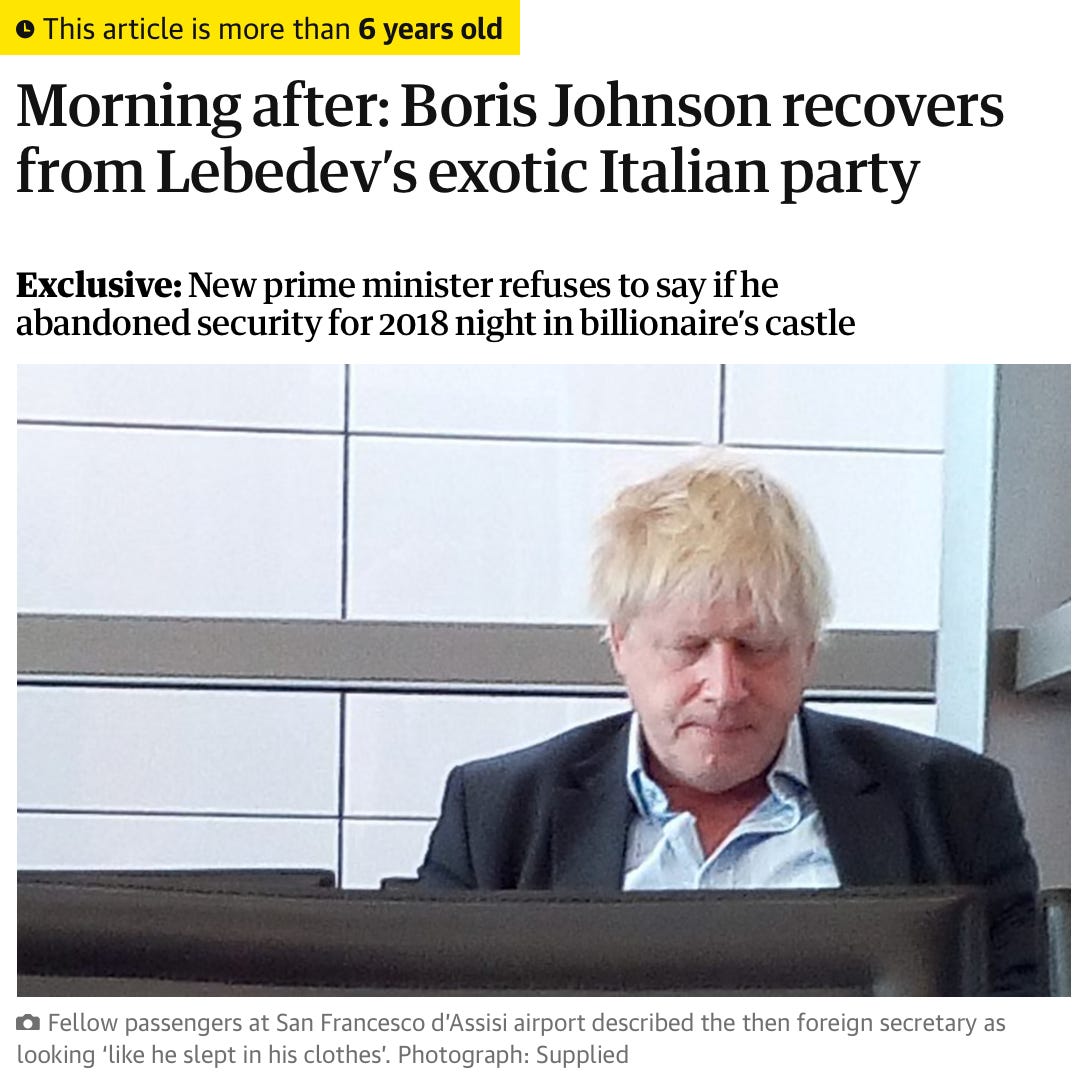
All of this unfolded under a Conservative government, which at least makes the instinct to bury it intelligible. Boris Johnson had every reason to shut this down: politically, personally, reputationally.
What’s harder to understand is why a Labour government is now doing so little to change course when MPs from the Greens and the Liberal Democrats are openly backing a public inquiry - and when there is a chance that an inquiry could uncover more Nathan Gill’s operating inside Reform. This is a political opportunity and it is being missed.
Instead Labour are telling us the situation is in hand and that the Rycroft Review is sufficient. This review is a three month process, it feels cobbled together due to a glaring hole in the forthcoming Elections and Democracy Bill. At this moment in time - I am totally unconvinced it is enough. However it may well do the job of persuading MPs that …
One thing is for certain - nothing will change by May.
Nigel Farage’s May elections strategy will be less about governing and more about narrative warfare… AGAIN! Through Reform UK, he can shape political apathy such as low voter turnout to amplify grievance narratives, and normalise a permanent sense of democratic betrayal.
The objective isn’t a majority but a base - a hardened 10–15% base that can be activated through immigration scares, culture-war flashpoints, and claims of elite sabotage. The aim is MAGA.
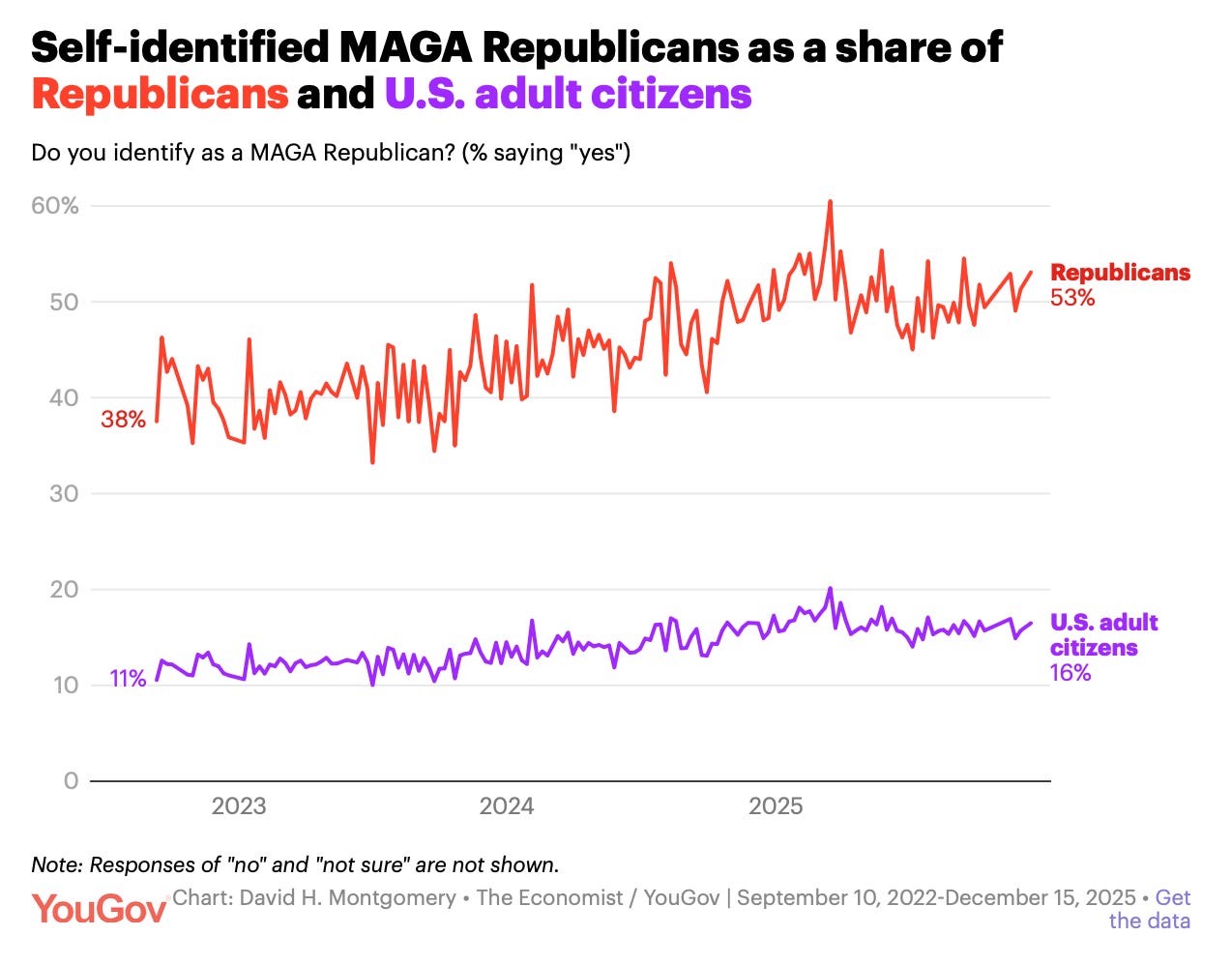
A Reform base of this size is enough to dominate media coverage, distort the political agenda, and pull the centre of gravity rightward, even without holding power. In the absence of a serious reckoning with how Brexit was shaped and sold, these narratives remain unchallenged - and Farage remains their most effective organiser.
So this is not the end. How can we stop now?
It is a line in the sand. The court has told us what it won’t do - and so it’s clarified what falls to politics and organised civic pressure. The work doesn’t just disappear because an institution stepped back - but it does get harder.
We know what happens when democratic ruptures are left unexamined: grievance hardens, disinformation fills the gaps, and the same actors return stronger each time and so we will keep pushing for truth, for accountability, and for a record that cannot be erased or rewritten.
The end of this route is the beginning of the next - we are not done. This battle will be an incremental one. So let us begin.
The next two weeks are critical.
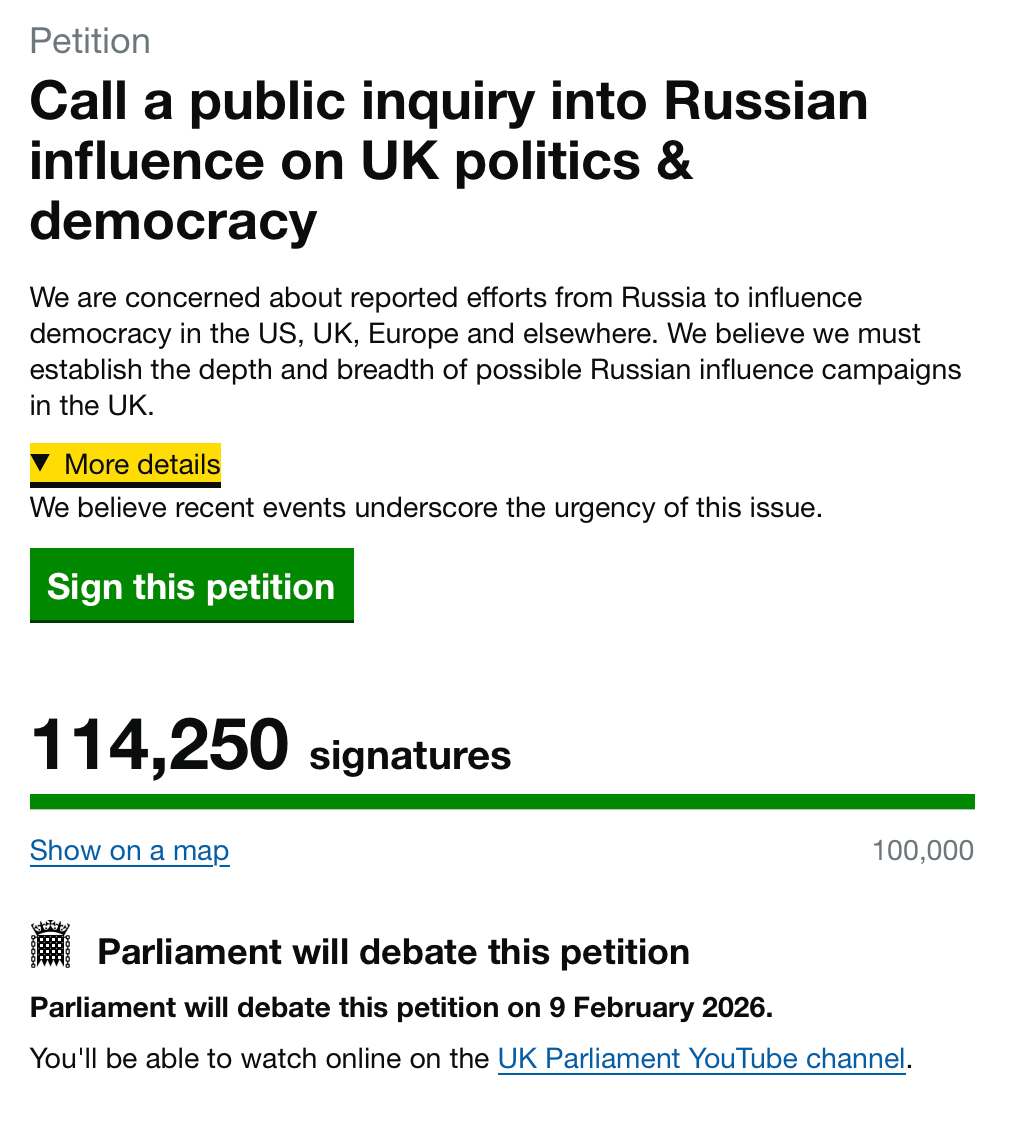
On Monday 9 February, Parliament will debate a petition calling for a public inquiry into Russian influence on UK politics and democracy.
Ahead of that, on Monday 2 February, we’re organising a cross-party MP briefing in Westminster to make sure MPs go into that debate with their eyes open.
The briefing will be chaired by Alex Sobel MP and brings together people who have spent years inside this issue from different angles: Dominic Grieve, Carole Cadwalladr, Christopher Steele, Susan Hawley and Sergei Cristo.
We will be talking about why repeated assurances that interference had no material impact don’t stand up. Why the Rycroft review is too narrow and too rushed. Why political finance remains a glaring vulnerability. And why legislating on elections before proper scrutiny - risks baking known failures into law.
Help sustain this work. Join the Citizens today with 50% off membership.
Which brings us to you.
MPs don’t turn up unless they think it matters. They don’t prioritise unless they know people are paying attention. If you’ve followed our reporting, listened to the podcast, or just have a bad feeling about where all this is heading, this is the moment when a small nudge really counts.
We’re asking you to write to your MP requesting them to attend the briefing on 2 February, and to be present, vocal and better informed at the debate on 9 February.
We’ll send you all a full rundown of what comes out of the briefing on the 2nd. But right now, we need to get MPs there - and that’s no easy task. Honestly it’s like herding cats. There’s ALWAYS something else happening and focus is super hard to get.
Behind the scenes we will keep plugging away and doing all we can to make sure that the ruling we did achieve from the ECtHR - that disinformation is the responsibility of the state to safeguard us against - is properly addressed in the forthcoming Elections and Democracy Bill - because that ruling is significant and must be leveraged.
And finally - thank you. This campaign has taken years. It’s only been possible because people stuck with it, even when it was uncomfortable or easy to dismiss. The Court didn’t go as far as we think the moment requires. So now this fight sits where it belongs - with us and we’re not done.
Or… you think we are barking mad and it’s time to let it go? Please tell us in the comments what you think - do we stop or do we fight on?
Please, please copy the message below, paste it into an email to your MP, add your name and postcode, then hit send.
🔎 Find your MP: https://members.parliament.uk/FindYourMP
Email Subject: Please attend the Russia interference briefing (2 Feb) and debate (9 Feb)
Dear [MP’s name],
I’m writing as a constituent to ask you to engage with the upcoming parliamentary work on Russian interference in UK politics.
There is a cross-party MP briefing in Portcullis House on Monday 2 February, ahead of the petition debate on Monday 9 February calling for a public inquiry into Russian influence on UK politics and democracy.
Given recent developments and growing public concern about foreign interference, I hope you (or a member of your office) will attend the briefing and take part in the debate.
This issue matters to me, and I’d appreciate knowing your position.
Best wishes,
[Your name]
[Your postcode]
________
See you next time,
Team Citizens